
REVIEW · ST ANDREWS & THE KINGDOM OF FIFE
St Andrews Old Course History Tour, for the Golfer
Old Course stories start at street level. This guided walk strings together St Andrews town history and the evolution of golf, finishing at the Road Hole area with photo stops built around the icons you see on every golfer’s bucket list. You also get a rare chance to walk across the Old Course fairway area on non-tournament days, which changes the whole feel of the place.
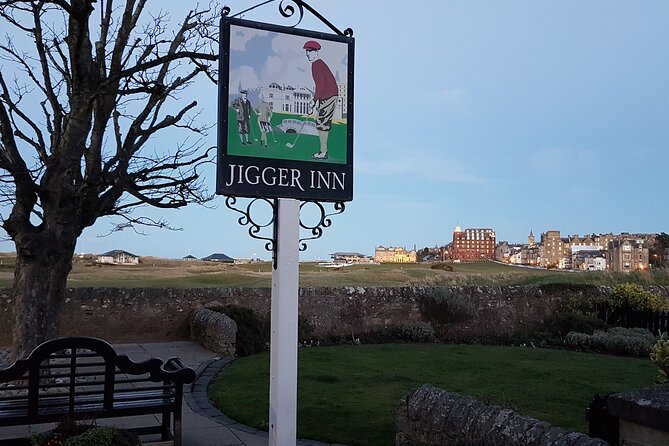
I especially like the small group size and the fact that the guide is a golf local, with Richard (a pro caddie type) sharing stories like golf is part history class and part living tradition. Two other big positives for me: you get a clear route through the course landmarks, and the tour is paced with frequent stops so you are not just moving through scenes, you’re learning why they matter. You also finish with a natural place to hang around after, near the Jigger Inn.
One thing to consider up front is the language and pace. The tour requires a fluent command of English, and some guests note the guide can speak quickly, so if you struggle to follow live conversation, you may find it harder to fully enjoy the stories.
In This Review
- Key points to know before you go
- St Andrews Old Course history tour: what makes this walk worth it
- Timing, walking pace, and the English requirement
- Stop 1: Hotel du Vin St Andrews and the 1123 Links charter
- Stop 2: The Links, origins of the game, and why St Andrews matters
- Stop 3: Royal and Ancient Golf Club of St Andrews and course shaping
- Stop 4: Grannie Clark’s Wynd, majors, and the move toward 18 holes
- Stop 5: Rusacks St Andrews and the 1st/18th fairway lore
- Stop 6: Swilcan Bridge photos, iconic views, and tournament day note
- Stop 7: The Jigger Inn finish near the Road Hole (17th green)
- Price and value: is $25 a fair deal for St Andrews Old Course access?
- Who should book this St Andrews Old Course history tour
- Should you book it? My practical decision guide
- FAQ
- How long is the St Andrews Old Course History Tour?
- How much does the tour cost?
- What language is the tour offered in?
- How many people are in the group?
- Where do I meet the guide?
- Where does the tour end?
- What is included in the price?
- Is the Swilcan Bridge photo shoot included on tournament days?
- Is the tour suitable for children and strollers?
- What is the cancellation and weather rule?
Key points to know before you go
- Richard’s storytelling ties St Andrews and Old Course moments into a single golf timeline you can actually remember
- Walk the Old Course fairway area on suitable days, with landmark views that feel close up instead of postcard distance
- Swilcan Bridge photos included with a professionally taken shoot on non-tournament days
- Small group size (max 15) keeps it personal, with more chance to hear and track the details
- Seven landmark stops in about 1 hour 15 minutes means you get the essentials without turning it into a long slog
St Andrews Old Course history tour: what makes this walk worth it

The Old Course is famous. But fame can make places feel flat. This tour avoids that by giving you context while you’re standing in the right spots. You do not just hear facts about golf’s origins, you learn how St Andrews shaped the game, then you move hole by hole toward the landmarks people obsess over.
What helps most is how the tour is organized. You start in town at Hotel du Vin St Andrews, then you work your way toward the core golf institutions and the specific course areas that define the Old Course vibe. By the time you reach Swilcan Bridge and the Road Hole area, the scenery clicks into place because you already understand what you’re looking at.
I also like the practical structure for first-timers. The route is short, the timing is tight, and the stops are spaced so you can absorb the stories without feeling dragged. At many stops, admission tickets are listed as free, so you are not budgeting extra entry fees on top of the tour price.
Timing, walking pace, and the English requirement
This is listed at about 1 hour 15 minutes, and it moves in a logical sequence. You’ll make multiple short stops rather than one long talk. That suits people who get restless on long tours, but it’s still active walking, so I recommend wearing shoes you already trust.
The physical level is described as moderate fitness. The tour is also not suitable for strollers or for people using crutches, walking frames, or mobility scooters. There is nowhere to leave mobility aids or golf clubs during the tour, so plan ahead if you are traveling with any extra equipment.
Now the big one: English. You need a fluent command of English, because speaking slowly or translating is not workable for this tour. A couple of guests flagged that the pace can feel fast. My advice is simple: if you think you’ll have to work hard to understand natural speech, bring a friend who can follow conversation easily, or choose a different tour style.
Group size matters too. It caps at 15 travelers. That small number often makes it easier to hear the guide and keep the tour moving without chaos.
Over the bridge into Fife, other versions of the day
- St Andrews Must-Sees Daily Walking Tour (11am & 2pm)
★ 5.0 · 478 reviews - St Andrews Old Course History Tour, for the Golfer
★ 4.5 · 150 reviews - St Andrews Tours: Town, Golf and Old Course History
★ 5.0 · 138 reviews - Private St. Andrews: Home of Golf Old Course Walking Tour
★ 5.0 · 69 reviews
Stop 1: Hotel du Vin St Andrews and the 1123 Links charter
Your tour starts at Hotel du Vin St Andrews, at 40 The Scores. The meeting instruction is clear: meet Richard outside the front of the hotel, and don’t be late. These public tours will not wait, so treat it like a timed appointment.
This first stop is about getting your bearings fast. You get town history leading into the 1123 Links charter. That date is a useful anchor because it frames St Andrews as something older than the modern golfing spectacle you’ll see on TV. It helps you understand why people talk about St Andrews as the heartbeat of the sport, not just a scenic coastal town with one famous course.
What I like about this start is that it turns the rest of your walking into a story with direction. Once you understand the early footprint of the game around the Links, every later mention of rules, course shaping, and club traditions feels less random. It also gives non-golfers a way in, since St Andrews town history is easier to relate to than pure technical golf talk.
Stop 2: The Links, origins of the game, and why St Andrews matters
Next you head to the Links and focus on golf’s beginnings. You’ll hear how golf developed from a 13th-century stick and ball tradition associated with the Low Countries, then how it spread toward Edinburgh by 1744. This kind of storyline matters because it explains why the game has always been tied to landscape and habit, not just equipment.
The tour frames St Andrews as the Home of Golf, and the Stops here are designed to explain the why, not just repeat the slogan. You learn how early development shaped how golf is played and talked about. That makes the Old Course feel less like a museum exhibit and more like a living place with roots.
One practical benefit: this is also an efficient way to understand what you are about to see. If you’re the kind of person who plans where to stand and what to watch, the background at this stop helps you spot the “this is where that tradition comes from” moments as you move.
Stop 3: Royal and Ancient Golf Club of St Andrews and course shaping
The third stop points you to the Royal and Ancient Golf Club of St Andrews. This is where the tour shifts from origins to influence, including how development of the Old Course helped develop the game itself.
You’ll hear how features like fairways and bunkers are connected to the course’s evolution. You also get golf-related moments, plus mentions of Old Tom and the old Caddie Shack. Those names come up a lot in Old Course lore, and hearing them in context helps you recognize that they are not just trivia. They’re linked to how golf course design and practice culture formed.
This stop is also where many golfers start to feel that special, slightly surreal sense of being in the right place. If you’ve played modern courses for years, the Old Course can feel different in scale and strategy. The guide’s stories help you understand that difference as a historical outcome, not a random quirk.
Stop 4: Grannie Clark’s Wynd, majors, and the move toward 18 holes
Grannie Clark’s Wynd is the setting for stories about major events like the Open Championship and Dunhill Cup, plus course development from 12 to 18 holes. This stop works because it connects the Old Course layout to the big moments that made golf globally recognizable.
You’ll also hear about important sites around the 18th. The tour’s structure means you’re building toward the end of the round as you walk, so the 18th is not just a hole number. It’s the final chapter of the course story.
A useful takeaway here is mental. When you understand that the Old Course layout evolved, you stop thinking of it as frozen in time. You see it as shaped by competition, by tradition, and by the way golfers actually move through the day.


Stop 5: Rusacks St Andrews and the 1st/18th fairway lore
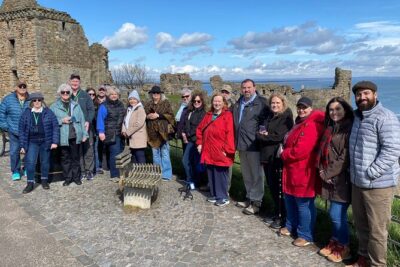
At Rusacks St Andrews, you spend time on the 1st and 18th fairway context, plus details about farmers, the Mannings, and the original 1st tee and 18th hole. This is also where the tour highlights a key putting green origin story tied to Old Tom and the earliest caddies and ladies.
Even if you do not care about putting history, this stop is valuable because it explains how practice culture formed around the Old Course. The tour makes you think about golf as a daily lifestyle, not a once-a-year event.
One reason this stop gets so much attention is that it connects social history with course history. Old Tom is not just a name, it’s a symbol of course evolution driven by real people and real needs. That kind of story helps both golfers and non-golfers feel like they understand the place, instead of just recognizing it.
You also end this segment in a way that keeps you oriented for the next big icon, Swilcan Bridge.
Stop 6: Swilcan Bridge photos, iconic views, and tournament day note
Swilcan Bridge is one of the most photographed landmarks in golf. Here, the tour includes a photo shoot moment on the bridge, aimed at capturing that signature Old Course look from the right angle.
Important detail: the bridge photo shoot is listed as excluded on tournament days, like Dunhill or the Open. That makes sense, and it’s also why you’ll want to pay attention to your date when you book.
This stop is short, but it tends to be a payoff. After walking through history and course development, Swilcan Bridge becomes more than a photo spot. You start to understand why it’s become a symbol for the entire sport. If you want a souvenir that looks like the real Old Course experience, this included professional photo moment can be a big part of the value.
Stop 7: The Jigger Inn finish near the Road Hole (17th green)
The tour ends at The Jigger Inn area near the famed Old Course. You’ll hear jaw-dropping golfing moments tied to the Road Hole, the 17th green of the Old Course. Then you finish near the 17th with an option to relax.
Refreshments are not included, but finishing near a place like the Jigger Inn is smart. After 1 hour 15 minutes of walking and stories, you’re ready to slow down without having to figure out what to do next.
This final stop also helps you think like a golfer. By focusing on the Road Hole moment, the tour gives you a mental highlight for how pressure, wind, and course strategy might feel on the Old Course. Even if you’re not planning to play, it helps your eyes read the course better if you decide to spend the rest of your day watching players from public areas.
Price and value: is $25 a fair deal for St Andrews Old Course access?
At $25 per person for about 1 hour 15 minutes, the best value angle is not the time. It’s what’s included and how much territory you cover in a short window. You get:
- A professional local guide (Richard)
- Multiple Old Course and golf institution stops
- A professionally taken photo shoot on Swilcan Bridge (with the tournament day limitation)
- A small-group experience, max 15 travelers
- Stops where admission tickets are listed as free
That combination can be a bargain compared to paying for separate museum tickets or doing a self-guided walk while trying to piece together golf history on the fly. If you’re the type who wants the place explained while you’re standing in it, $25 is easier to justify.
If you are only interested in taking photos and do not care about golf history, you might feel the stories take up more time than you want. But even then, the Swilcan Bridge photo moment and the route through major Old Course landmarks can still make it worthwhile.
Also note that it’s booked about 61 days in advance on average, which hints at demand. Booking early gives you more chance of finding a time that matches your schedule and avoids tournament-day surprises.
Who should book this St Andrews Old Course history tour
I’d point you toward this tour if you fit one of these profiles:
- You’re a golfer who wants the Old Course explained beyond the basics
- You want a St Andrews walk that includes course landmarks and real golf lore
- You’re traveling with someone who is not a golfer, and you still want them to enjoy the day
- You like short guided experiences with lots of story stops rather than a long lecture
It also tends to suit people who are visiting St Andrews for the first time and want an easy way to learn the key names, places, and course areas in a single afternoon window.
On the other hand, you should look elsewhere if:
- You do not feel confident following spoken English in a live, fast-moving group setting
- You need stroller access, mobility aids support, or step-free flexibility
- You’re traveling with young kids under 5
- You have medical limitations involving new knee or hip replacements, sprained ankles, or similar issues (the tour lists these as not suitable)
Should you book it? My practical decision guide
Book this tour if you want a focused St Andrews experience with a guide who treats the Old Course like a story that still matters. The small-group format, the structured landmark route, and Richard’s caddie-style storytelling make it a strong fit for golfers and history-minded visitors alike. The included Swilcan Bridge photo moment can also turn the tour into a high-quality souvenir package.
Skip it or compare alternatives if you need slow pacing, translation, or easier accessibility. The tour also has a tight schedule, so if you hate walking in cold weather or you’re unsure about your stamina, plan carefully. If your day in St Andrews includes non-tournament conditions, you’re more likely to get the full feel of walking the course areas the tour is designed for.
If you want one “best use of time” activity in St Andrews that connects golf origins to the holes people talk about most, this is a solid choice.
FAQ
How long is the St Andrews Old Course History Tour?
The tour runs about 1 hour 15 minutes (approx.).
How much does the tour cost?
The price is listed as $25.00 per person.
What language is the tour offered in?
The tour is offered in English, and participants should have a fluent command of English. Speaking slowly or translating does not work.
How many people are in the group?
The tour has a maximum of 15 travelers.
Where do I meet the guide?
You meet at Hotel du Vin St Andrews, 40 The Scores, St Andrews KY16 9AS, UK.
Where does the tour end?
The tour ends at Swilcan Bridge, 17 The Links, St Andrews KY16 9JE, UK, near the Old Course Jigger Inn at the Road Hole (17th).
What is included in the price?
Included items are a professional local guide and professionally taken photos on Swilkan Bridge (excluding tournament days).
Is the Swilcan Bridge photo shoot included on tournament days?
No. The Swilcan Bridge photo shoot excludes tournament days such as Dunhill and the Open.
Is the tour suitable for children and strollers?
The tour is not suitable for under 5s, and it is not suitable for strollers or carriages.
What is the cancellation and weather rule?
Free cancellation is available if you cancel up to 24 hours in advance for a full refund. The experience requires good weather, and if it is canceled due to poor weather you will be offered another date or a full refund.
A Wider Spread of Tours
The Rest of What We Wrote Up
Over the Bridge Into Fife
Newest write-ups around St Andrews
- St. Andrews Scenic Stroll: A Private Walking Exploration★ 5.0 · 6 reviews
- The Original St Andrews Photo Shoot Tour★ 5.0 · 7 reviews
- A Wee Walk and a Cocktail in St. Andrews★ 4.0 · 7 reviews
- St Andrews Walking Tours★ 5.0 · 8 reviews
- Barrel-top whisky tasting in St Andrews★ 5.0 · 20 reviews
St Andrews & the Kingdom of Fife, compared.
 ★ 4.5St Andrews & the Fishing Villages of Fife Small-Group Day Tour from EdinburghFrom $591,973 reviews
 ★ 4.5Rosslyn Chapel, Dunfermline Abbey and Stirling Castle Day TourFrom $77649 reviews
 ★ 5.0St Andrews Must-Sees Daily Walking Tour (11am & 2pm)From $20478 reviews
 ★ 4.5St Andrews & The Fishing Villages of FifeFrom $73431 reviews
 ★ 5.0St Andrews & Cliffs and Dunnottar Castle in Spanish.From $89178 reviews
 ★ 5.0St Andrews Tours: Town, Golf and Old Course HistoryFrom $27138 reviews
 ★ 5.0Private St. Andrews: Home of Golf Old Course Walking TourFrom $19469 reviews
 ★ 5.0St Andrews and the Kingdom of Fife from GlasgowFrom $5068 reviews
Browse the lists this tour appears in