
REVIEW · GLASGOW TOURS & DAY TRIPS
Glasgow Must-See Attractions Walking Tour with A Guide
Glasgow in three hours feels oddly doable. This walking route strings together big civic sights, medieval landmarks, and the Clyde waterfront so you get your bearings fast. I like the free-access stops that let you see plenty without hunting for paid entry, and I especially like the local storytelling when you land with guides such as Keith MacKenzie, Gary, or Josh.
One thing to plan for: the pace is brisk, with about 18 minutes per stop, so you will move a lot and you may not get long, slow time in any one place.
In This Review
- Key Things You Should Know Before You Go
- Glasgow orientation in 3 hours, with real-world city stops
- George Square to Glasgow Cathedral, civic power and medieval stone
- The Necropolis views and Merchant City street culture, history above the city
- Tolbooth Steeple and St Andrews In The Square, older buildings with new jobs
- People’s Palace and Winter Gardens, social history plus real plants in glasshouses
- Following the River Clyde to Buchanan Street and Glasgow Green
- Guide impact: when Keith, Gary, Josh, and Noor raise the level
- Pacing, comfort, and what you should bring for a 3-hour walk
- Price and value around $62.71 per person
- Who this Glasgow walking tour suits best
- Should you book this Glasgow Must-See Attractions Walking Tour?
- FAQ
- How long is the Glasgow walking tour?
- Where does the tour start and end?
- How much does the tour cost?
- What language options are available for the guide?
- Is admission included for the stops?
- Is food or drink included?
- Is transportation included?
- Is this tour private?
- How many people are needed for the group option?
- Can I cancel for a refund?
Key Things You Should Know Before You Go
- A tight loop from George Square and back again, so you spend less time figuring out logistics and more time seeing the city.
- A free-access style itinerary, with stops like Glasgow Cathedral and the Necropolis listed as free-entry on the route.
- Street-level Glasgow, not museum-only, mixing churches, courtyards, historic towers, markets-on-the-way vibes, and park time.
- Guide quality really matters, and named guides like Keith MacKenzie, Gary, and Noor have stood out for their depth and warmth.
- Good photo opportunities at multiple stops, especially around the cathedral, Tolbooth Steeple clock tower views, and the Clyde.
- Fast walking, even if the history is good, so comfortable shoes are not optional.
Glasgow orientation in 3 hours, with real-world city stops
If you have only half a day in Glasgow, this tour gives you a strong first pass through the city’s main “storylines.” You start at George Square, then you step into medieval Glasgow at Glasgow Cathedral, move into the Necropolis views, slide through Merchant City, and then work your way toward the River Clyde and the shopping pulse on Buchanan Street. You finish back at George Square after a last reset at Glasgow Green.
What makes this format practical is the mix. You are not bouncing between far-flung neighborhoods. You are mostly staying in an easy walkable arc, with short stop-and-learn moments that keep things moving. It is also built for many languages. The guide can work in English, Spanish, French, or Italian, which is great if you want someone to explain what you are looking at in a language you actually speak.
The other real advantage is what you do not get. This is a city walk, not a deep dive inside paid attractions. So even if you are the type who loves churches, cemeteries, and courthouses, you will still get a broad overview instead of getting stuck in one ticket line or one museum room.
George Square to Glasgow Cathedral, civic power and medieval stone
George Square is a smart kickoff because it is a civic hub you can use as a mental anchor. Statues and monuments line up in a way that helps you understand the city’s public-facing identity. It also sets a visual baseline for the rest of the walk, since you immediately go from civic scale into older religious architecture.
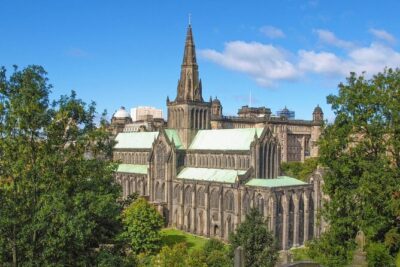
Glasgow Cathedral is the medieval pivot. You should expect time both outside and the chance to look inside, since the cathedral is listed with free admission on the route. The focus here is the architecture: soaring arches, stained glass, and intricate stone carvings. It is the kind of place where the guide’s explanation can make details easier to spot, like what you are looking at and why the building matters in Glasgow’s development.
A quick practical note: this stop is listed at about 18 minutes, so you will want to walk in with a “what should I notice” mindset. If you go searching for every carving, you will lose the flow of the tour.
What else runs out of Glasgow
- Guided Celtic Park Stadium Tour
★ 5.0 · 3,136 reviews - City Sightseeing Glasgow Hop-On Hop-Off Bus Tour
★ 4.5 · 1,873 reviews - Oban, Glencoe, Highlands Lochs & Castles Small Group Day Tour from Glasgow
★ 5.0 · 1,432 reviews - Glasgow City Centre Walking Tour with Local Guide
★ 5.0 · 1,326 reviews
The Necropolis views and Merchant City street culture, history above the city
After the cathedral, the route lifts you into the Glasgow Necropolis. This cemetery sits above the city and gives you those classic high-position skyline views. Even if cemeteries are not your normal tourist stop, the Necropolis works on a guided walk because it is built for storytelling: winding paths, ornate tombs, and notable figures connected to Glasgow’s past.
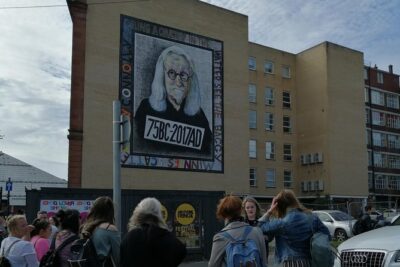
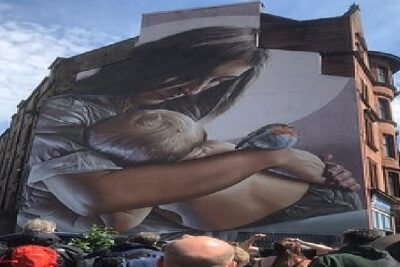
Then you shift into Merchant City. This is a different mood. Expect cobbled streets, a cluster of shops and galleries, and street art that makes the area feel lived-in rather than staged. The guide’s job at this stage is to connect what you see on the ground to the wider Glasgow story, like how commerce and culture shaped the neighborhood.
The tradeoff is that Merchant City is a “look and walk” stop. You will not have time for long shopping detours unless your guide slows down or you break away on your own for a minute. If you love art galleries, you might enjoy getting pointers on what to search for on your own later.
Tolbooth Steeple and St Andrews In The Square, older buildings with new jobs
Tolbooth Steeple brings in a very Glasgow angle: the 17th-century clock tower that once served as a prison and courthouse. That is a great example of why a guided walk beats staring at signage. A guide can explain the role of the building in how justice and civic control worked back then, and then you get a strong photo spot with the tower rising above street level.
Right after that, St Andrews In The Square adds a calm contrast. It is a restored church-turned-venue, so you get Georgian architecture plus a more modern cultural use case. Expect a serene courtyard and an exterior-and-interior look depending on what is open during your visit. The point here is not a full concert-going experience. It is understanding how the city repurposes historic spaces.
If you are the type who likes atmosphere, this is one of the best pauses on the walk, because you can slow your pace for a moment and just take in the geometry and quiet.
People’s Palace and Winter Gardens, social history plus real plants in glasshouses
People’s Palace and Winter Gardens is a standout because it combines two very different kinds of “Glasgow inside.” You get interactive exhibits focused on social history, and you also get a botanical component with lush gardens and Victorian glasshouses.
This is the stop that can work for multiple traveler types at once. If you like history, you can focus on working-class heritage and the story of everyday life. If you prefer outdoors and plants, you get the greenhouse vibe without needing to plan extra transport or a separate trip.
Time will still be limited, so decide what you want more in that 18-minute window. If you want the greenhouse, head that way first. If you want the social history exhibits, do those first and then circle back for any quick garden highlights.
This stop also helps you break up the “all stone and monuments” feeling of the early part of the tour.
Following the River Clyde to Buchanan Street and Glasgow Green
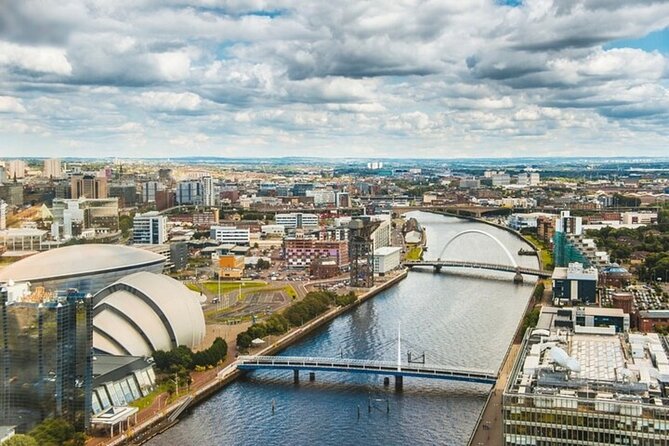
The River Clyde is the natural storytelling bridge between old Glasgow and its evolution. The waterfront shaped the city’s development, and you see it through modern bridges, waterfront development, and the wider skyline views. This is where you can start to connect what earlier stops implied, since the Clyde is one of the reasons Glasgow grew into the major city it became.
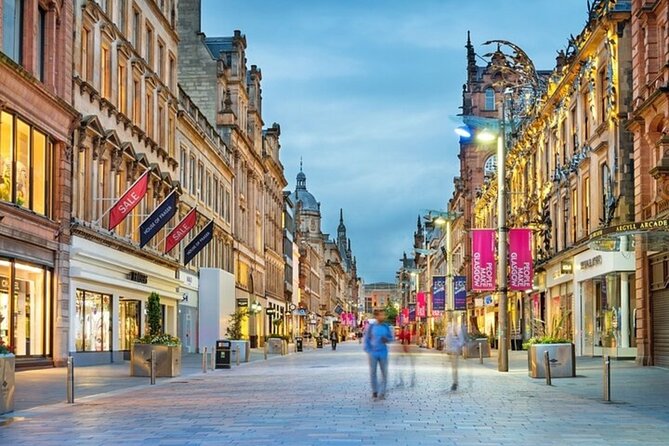
Once you reach Buchanan Street, you get a switch in vibe. This is Glasgow’s premier shopping destination, packed with department stores, upscale shops, and cafes. It is a good place to people-watch for a minute, reset your legs, and decide if you want to linger after the tour.
Then you end at Glasgow Green. This is the oldest public park in Glasgow, and it works like a soft landing after busy streets. Expect scenic paths, historic monuments, and places to just sit for a second. The park also offers great sightline context for the areas you just visited, including views connected to People’s Palace and Winter Gardens.
Even though it is the last stop, it is not random. Finishing in a park makes it easier to digest the tour, like closing a book with a quiet final page.
More ground covered on foot
Guide impact: when Keith, Gary, Josh, and Noor raise the level
On a tour like this, the biggest variable is the guide’s style. The good versions of this walk are not just facts. They are a chain of stories that help you read the city like a map.
Keith MacKenzie has been highlighted for turning Glasgow into a narrated experience, mixing architecture, local life, and bigger historical turning points. Gary has been praised for friendly patience and for answering lots of questions, which matters when you are new to Scotland. Josh has been noted for asking what you care about and then steering the walk to match your interests. Noor has stood out for being especially helpful and for guiding in a way that made the experience enjoyable.
The Spanish note is also interesting. Some guides have been praised for excellent Spanish, which can make the tour feel easier if that is your first language or the language you want your explanations in.
I will also say the tour format can feel different depending on the guide. If your guide is more of a “walk to the next spot” type, you may end up wanting more context while you are moving. If you get a story-driven guide, you will likely enjoy the short stop timing more, because the explanations help you notice details faster.
Pacing, comfort, and what you should bring for a 3-hour walk
You are looking at a short duration, about 3 hours, but it is packed. With roughly 18 minutes per stop and ten stops total, you will likely be walking more than you think, even though each segment is brief.
Plan for:
- Comfortable shoes with grip. Cobblestones and uneven pavement are common in parts of central Glasgow.
- Weather gear. Glasgow can switch fast, and you do not want to cut your tour short because you are cold or damp.
- A charged phone. You get a mobile ticket, and you will likely use photos and quick map checks.
If you like to linger, you might have to compromise. The tour is designed for momentum, not for slow museum-style wandering. Your best move is to pick one or two stops you want to “go deep” on, like People’s Palace and Winter Gardens, and then let the others stay lighter in your head.
Price and value around $62.71 per person
At about $62.71 per person for roughly three hours, the value comes from three places.
First, you get a guided route through major areas without needing to design your own itinerary. That saves time, and in cities like Glasgow, time matters more than a few extra miles.
Second, the route heavily emphasizes free-access stops. George Square, Glasgow Cathedral, the Necropolis, Tolbooth Steeple, and the church-venue at St Andrews In The Square are listed as free admission on the tour plan. That reduces the usual “tour tax” where you pay for attractions on top of the guide.
Third, the included help matters. You can also get assistance from the team to book tickets for desired visits if you want to add something beyond what is handled by the walk. Even when the main stops are free, having that support makes planning less stressful.
You still should budget for personal extras. Food and drink are not included, and public transport costs are on you if you connect from somewhere else before or after. Also, the tour is a city walk, so it is not covering paid museum entry beyond what is already listed for each stop.
Who this Glasgow walking tour suits best
This tour fits best if you:
- Have a half-day in Glasgow and want a logical hit list without overplanning
- Like architecture, churches, and historic streets, plus a bit of waterfront scenery
- Want a local perspective that can answer questions as you walk
- Prefer small-group or private attention, since the experience is set up for your group
It might not be ideal if you:
- Want long, detailed “stand and listen” lectures at each site
- Prefer to spend 30 to 60 minutes inside major museums or paid attractions
- Get easily tired by frequent walking and quick stop timing
Should you book this Glasgow Must-See Attractions Walking Tour?
Yes, if you want a smart first look at Glasgow that balances civic landmarks, medieval sights, and modern city life in a single loop. The route makes sense, the ticket approach is mostly free-access based, and the guide can turn short stops into something memorable.
If you are very sensitive to pacing, pick your must-see moments in advance. Aim to prioritize either Glasgow Cathedral or People’s Palace and Winter Gardens, then treat the other stops as quick wins and photo breaks. And if your language matters, choose the guide language you are most comfortable with, since the tour is offered in English, Spanish, French, and Italian.
FAQ
How long is the Glasgow walking tour?
It is approximately 3 hours.
Where does the tour start and end?
It starts at George Square, Glasgow G1, UK, and ends back at the meeting point.
How much does the tour cost?
The price is $62.71 per person.
What language options are available for the guide?
The guide is offered in English, Spanish, French, and Italian.
Is admission included for the stops?
The tour plan lists free admission for the stops described. Entry to monuments and museums is listed as not included, so paid extras are not covered.
Is food or drink included?
No, drink and food are not included.
Is transportation included?
No. Any public transport you use during the tour is at your own expense.
Is this tour private?
Yes. Only your group will participate, with private or small group options available.
How many people are needed for the group option?
A minimum of 2 participants is required for the group option.
Can I cancel for a refund?
Yes, you can cancel for a full refund up to 24 hours in advance of the experience’s start time.
A Wider Spread of Tours


The Rest of What We Wrote Up
What Else Leaves Glasgow
Newest write-ups around Glasgow
- The Scottish Highlands Photography Tour & Workshop★ 5.0 · 3 reviews
- Scottish Highland Day Tour from Glasgow★ 5.0 · 3 reviews
- Whisky Adventure – Private Day Tour from Glasgow★ 5.0 · 3 reviews
- 3 Day Isle of Skye Eilean Donan Castle and Loch Ness Tour★ 5.0 · 3 reviews
- Pints & Past: Glasgow Pub Tour Private Tour★ 5.0 · 3 reviews
Glasgow Tours & Day Trips, compared.
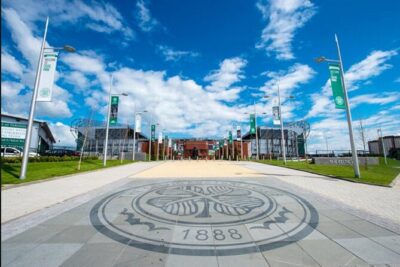 ★ 5.0Guided Celtic Park Stadium TourFrom $253,136 reviews
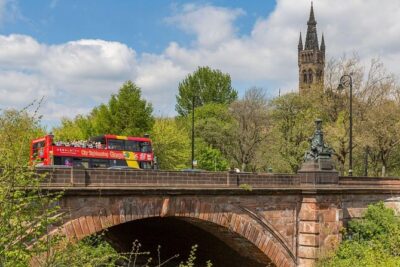 ★ 4.5City Sightseeing Glasgow Hop-On Hop-Off Bus TourFrom $271,873 reviews
 ★ 5.0Oban, Glencoe, Highlands Lochs & Castles Small Group Day Tour from GlasgowFrom $501,432 reviews
 ★ 5.0Glasgow City Centre Walking Tour with Local GuideFrom $161,326 reviews
 ★ 5.0Loch Ness & the Highlands Day Tour from Glasgow Including CruiseFrom $831,211 reviews
 ★ 5.0Celtic Park Tour & Dine PackageFrom $60998 reviews
 ★ 4.5Loch Ness, Glencoe, and the Highlands Day TourFrom $76806 reviews
 ★ 4.5Glasgow Afternoon Tea ExperienceFrom $61735 reviews
Browse the lists this tour appears in