

REVIEW · GLASGOW TOURS & DAY TRIPS
Gander Walking Tours in Glasgow
Glasgow has a darker, funnier side. This small-group walk connects the city’s top sights to street-level legends, all through the idea of Mother Glasgow.
I especially love the small group size and how the guide Johnny keeps the tour personal, fast-moving, and easy to follow. I also love the mix of big-hitter landmarks with the kinds of details you normally miss, like that rooftop ship watch on George Square and the street art trick on St. Mungo at High Street. One possible drawback: you’ll cover a lot of ground in about three hours, and the pace can feel intense if you stop often for photos or need frequent breaks.
If you want a first-time Glasgow reset, this is a strong way to do it. You’ll leave with a clear map of central sights, plus a long list of places to eat and wander next.
In This Review
- Key highlights before you step out
- A Proper Gander: Mother Glasgow starts at Royal Exchange Square
- Small group, 3 hours, and why it matters for your day
- Duke of Wellington Statue: cones, traditions, and Glasgow humor
- George Square and the City Chambers: the civic heart in motion
- Georgian Glasgow and the pig-like gluttony story you didn’t expect
- “Mother Glasgow” in shadow: commercial then industrial, decline then renaissance
- Trongate and Tron Kirk Steeple: entertainment in the grottiness
- Tolbooth Steeple and Glasgow Cross: the epicentre at street level
- St Mungo at High Street: street art that feels like a secret
- Provand’s Lordship area: four buildings and the small blue twist
- Glasgow Cathedral and the Necropolis: medieval Gothic meets Victorian shadows
- Price of $16.64: value comes from focus, not volume
- Weather, shoes, and how to be ready for a street-level day
- Who this Glasgow Gander tour suits best
- Should you book this Glasgow walking tour?
- FAQ
- How long is the Glasgow walking tour?
- Where do I meet and where does the tour end?
- What time does the tour start?
- How big is the group?
- What language is the tour offered in?
- Do I get a mobile ticket?
- Can I cancel for a full refund?
Key highlights before you step out
- Up to 15 people means more time for questions and a tour that feels like a local chat
- Johnny’s storytelling style uses props, photos, and lots of specific anecdotes
- From George Square to Glasgow Cathedral you get both the civic heart and the Gothic finale
- Mother Glasgow theme gives the city a through-line, commercial to industrial to modern
- Street art and quirky myths keep the tour entertaining, not just factual
A Proper Gander: Mother Glasgow starts at Royal Exchange Square
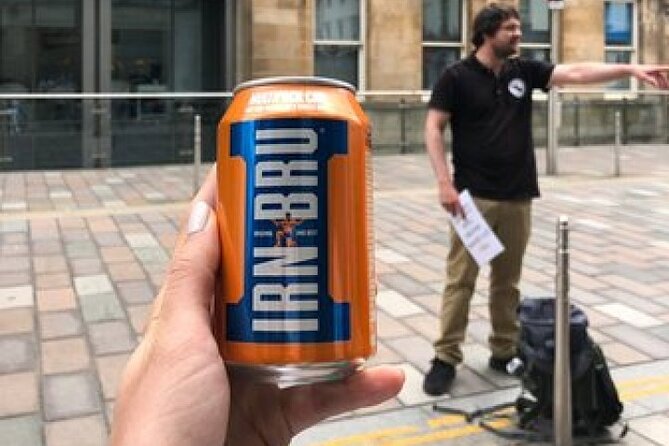
Meet at Royal Exchange Square, right in central Glasgow, near the bustle but close enough to keep the walk efficient. The tour starts at 10:30 am, and it ends at Glasgow Cathedral (inside, on the northwest side of the city center area).
The whole experience is built around a character-style guide approach: the self-styled Glasgow Gander introduces you to Mother Glasgow, the nickname that ties together the city’s big energy, heavy industry, and clever reinvention. If you’ve only seen Glasgow through photos of architecture, this theme helps you see the city as a single evolving story.
This is also where you get the tone: jokes, oddball details, and practical wayfinding. It’s the kind of tour where you’ll likely start noticing things you walked right past yesterday.
Small group, 3 hours, and why it matters for your day
This tour runs about three hours, and the group tops out at 15. That size is a big deal in a city like Glasgow, where sidewalks can be crowded and landmarks are spread across the centre.
With a small group, you can actually hear the guide, spot the details he points out, and still have time to enjoy the stops instead of feeling herded. Based on how the tour operates, Johnny keeps an easy-to-follow rhythm, even on colder, rainy days, and the schedule includes short stop windows so you are not standing in one place forever.
Practical note: three hours is not a long time. If you want to treat each photo stop like a mini-shoot, you may need to move a little quicker than you normally would. Wear comfy shoes and plan to feel the walk in your legs.
What else runs out of Glasgow
- Guided Celtic Park Stadium Tour
★ 5.0 · 3,136 reviews - City Sightseeing Glasgow Hop-On Hop-Off Bus Tour
★ 4.5 · 1,873 reviews - Oban, Glencoe, Highlands Lochs & Castles Small Group Day Tour from Glasgow
★ 5.0 · 1,432 reviews - Glasgow City Centre Walking Tour with Local Guide
★ 5.0 · 1,326 reviews
Duke of Wellington Statue: cones, traditions, and Glasgow humor
The walk starts with a quick hop to the Duke of Wellington Statue. Here you’ll learn a playful, distinctly Glasgow tradition involving Wellington’s cone-wearing look.
It’s a small stop, but it sets up the tour’s style. Instead of treating landmarks as static monuments, Johnny treats them like props in a city-wide comedy with a historical reason behind the joke. You’ll also start building a habit for the rest of the day: look closely at what seems ordinary first, then ask why it got that way.
If your trip is short, this early “why it looks like that” moment is a good sign you’ll get value out of the full route.
George Square and the City Chambers: the civic heart in motion
Next up is George Square, the symbolic centre of Glasgow. Johnny guides you around this key public space and points out details that make the square feel alive rather than just scenic.
One moment to watch for is the unpredictable movement of a rooftop ship. It sounds like a gimmick, but it’s exactly the kind of local quirk that turns a familiar square into something memorable.
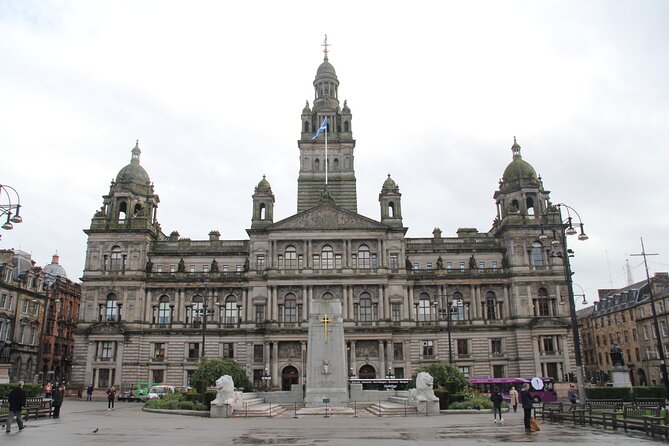
Then you’ll focus on one of northern Europe’s finest civic buildings, the Glasgow City Chambers. This is where the tour’s storyline kicks harder. You’ll connect the scale of Glasgow’s civic ambition to the city’s industrial climb and later changes.
If you love architecture, pay attention at this stage. The guide’s explanations help you see how buildings communicate status, not just style.
Georgian Glasgow and the pig-like gluttony story you didn’t expect
Some stops are not on every standard route. Between the obvious big landmarks, you’ll hit a less-heralded side of central Glasgow, including Georgian buildings.
You’ll also hear a funny but slightly offbeat tale about a club where pig-like gluttony was encouraged. It’s the kind of story that works because it matches Glasgow’s reputation for blunt humor and stubborn character.
This is also a good point in the walk to recalibrate your expectations. Yes, you’ll see famous sights. But you’ll also learn how Glasgow’s social life and identities shaped the city you are walking through today.
“Mother Glasgow” in shadow: commercial then industrial, decline then renaissance
A key stretch of the tour is about scale and change. In the shadow of one of the centre’s striking buildings, you’ll hear the unflinching story of how Glasgow grew as a commercial and then industrial city, faced decline, and then went through a renaissance.
This is where the Mother Glasgow theme becomes more than a clever nickname. You’ll connect the city’s historical muscle to its modern impact in the wider world. The point is not doom and gloom, it’s cause and effect: what the city built, what it lost, and what it chose to rebuild.
If you like city history that stays human and understandable, this is a strong segment. You’ll walk away with a clearer sense of why Glasgow looks the way it does right now.
More ground covered on foot


Trongate and Tron Kirk Steeple: entertainment in the grottiness
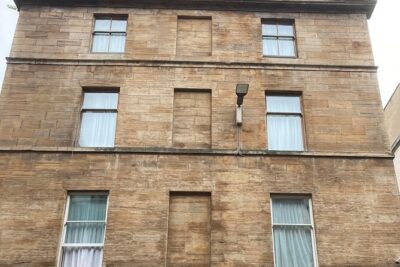
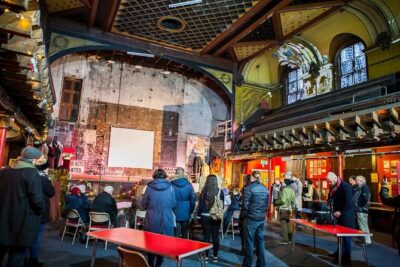
Heading to Trongate, you’ll be on an ancient thoroughfare near the 16th-century Tron Kirk Steeple. This stop blends old street geometry with a story about an incredible hidden entertainment venue.
You’ll hear the tale in all its glory and grottiness. That combination is important, because it mirrors what Glasgow does well: it treats “dark and odd” as part of the charm, not as a reason to look away.
This is also a practical moment. If you want to return later on your own, Johnny helps you understand where these old entertainment spaces fit into the street patterns. You are not just hearing facts, you are learning how to navigate and notice.
Tolbooth Steeple and Glasgow Cross: the epicentre at street level
Then you’ll reach Tolbooth Steeple, beneath the 17th-century landmark where key city streets meet. It’s near Glasgow Cross, the epicentre feeling of the city centre, where the Trongate, the Saltmarket, London Road, the Gallowgate, and High Street all converge.
At this point you get the real street-level geography of central Glasgow. It becomes easier to picture where you are and where you should head next after the tour.
This stop is also a good check for your interests. Even if you are not a hardcore architecture fan, the location and the guide’s storytelling make the area feel important. You’ll understand why this corner matters, then you’ll be ready to explore it again later on your own.
St Mungo at High Street: street art that feels like a secret
At St. Mungo at High Street, you’ll see Glasgow’s most famous son hiding in plain sight. This is one of the tour’s fastest stops, but it’s built to be memorable.
You’ll also learn how to spot the street art moment that Johnny highlights as one of the best pieces you’ll find during your visit. If you’re into modern Glasgow culture, don’t rush past this section. It’s short, but it’s designed for impact.
This is also a nice reminder that Glasgow isn’t only Victorian stone and old churches. You’re walking through layered time.
Provand’s Lordship area: four buildings and the small blue twist
Across from Provand’s Lordship, Glasgow’s oldest house, you’ll take in four special buildings. One of them is described as a small blue one that is sometimes used for inter-dimensional travel.
That sounds like a joke, and it is played that way. But it also shows the tour’s approach: a blend of serious place identity and playful myth. You’ll get a sense of how Glasgow museums, buildings, and small institutions sit quietly in plain view while stories swirl around them.
If you like the “I would never have found this” feeling, pay attention here. It’s the kind of segment that makes you want to wander back once the tour ends.
Glasgow Cathedral and the Necropolis: medieval Gothic meets Victorian shadows
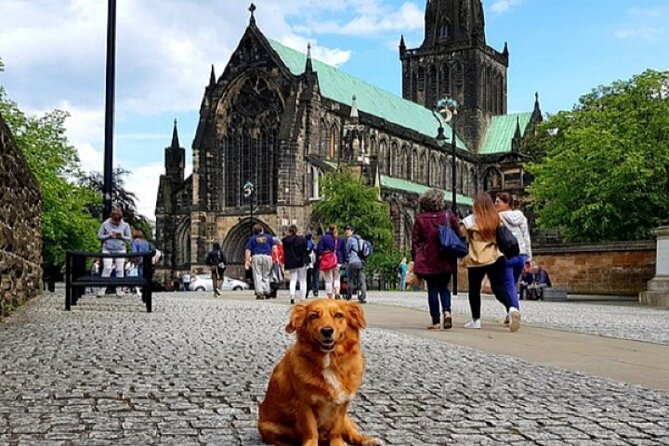
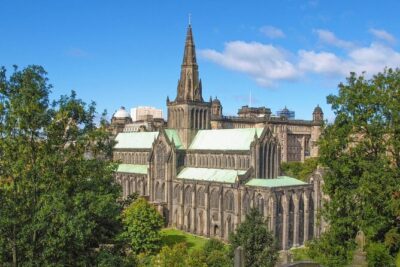
Finally, you reach Glasgow Cathedral, the architectural pinnacle of the tour. Johnny frames it as a medieval Scottish Gothic cathedral with a dramatic backdrop of Victorian Glasgow’s Necropolis behind.
This stop is about atmosphere. You’ll see how the city’s religious architecture sits in conversation with the way Glasgow grew and mythologized its own past. If you’re used to cathedrals being just quiet and respectful, this one feels like it’s part of a larger city drama.
There’s one timing consideration. Depending on COVID restrictions on group size and mask-wearing inside the cathedral, the tour may finish outside the church. That means you should plan on spending a little extra time at the end if you want to look around at your own pace.
Either way, this is a strong finale. It gives you a clean emotional landing after a walk full of stories.
Price of $16.64: value comes from focus, not volume
At $16.64 per person for about three hours, this tour is good value if you want orientation plus personality. You are paying for more than walking and basic facts. You’re paying for a guide who connects landmarks to the city’s identity, then points out details you would not naturally notice.
A standout value factor is the small group, maximum 15. Most “cheap walking tours” either run with huge groups or focus on quick photo stops. Here, the route is built around short, meaningful segments that keep you engaged.
You also get extras that make the tour feel cared for, including props and photo moments during storytelling, plus a guide who sends out a list of recommended places afterward. That matters because the tour ends in one spot, and Glasgow is big. The follow-up list can help you keep your trip from turning into random aimless wandering.
Weather, shoes, and how to be ready for a street-level day
Glasgow weather has a vote. Even in rain, the tour keeps moving, and the route is set up as an efficient city-centre walk.
Bring:
- Comfortable walking shoes (you will be on your feet)
- A light waterproof layer if forecasts look sketchy
- Something small to write with, if you like to capture details quickly
Also, keep in mind that city centre streets can be noisy. The guide works to make sure you hear the stories, but your best chance of catching everything is to stay near the front and watch where he points.
If you’re traveling with a baby or using a stroller, this is one of those tours that seems to work smoothly. You’ll want to keep an eye on tight footpaths, but the tour is designed for general participation.
Who this Glasgow Gander tour suits best
This walk fits best when you want:
- A first-time Glasgow overview that doesn’t feel like a checklist
- A guide who tells stories with real place details, not just dates
- A route that mixes landmarks with the smaller, quirky bits of the city
It also works well if you’re traveling with multiple ages. The tone is friendly and the pace is not designed to trap you in long museum lines. You should still expect an active walk, not a sit-down experience.
If you already know Glasgow deeply and want only niche academic detail, you might find parts are more story-driven than lecture-driven. But for most visitors, the balance hits the sweet spot.
Should you book this Glasgow walking tour?
Yes, I think you should book it if you want to understand Glasgow quickly and actually enjoy the walk. The Mother Glasgow theme gives structure, the small group keeps it personal, and Johnny’s approach brings the city to life with humor plus useful direction for what to do next.
Skip it only if you hate walking in the centre or you want a strictly factual, museum-style presentation. This tour is made for people who like stories, street-level clues, and the kind of Glasgow details that make you feel smarter while you explore.
If your schedule is tight, this is a great use of a half-day chunk. You’ll end at Glasgow Cathedral with a fuller sense of the city, and you’ll have plenty of ideas for what to chase after the tour.
FAQ
How long is the Glasgow walking tour?
The tour is about 3 hours.
Where do I meet and where does the tour end?
You start at 8-10 Royal Exchange Square, Glasgow G1 3AB, UK. It ends at Glasgow Cathedral, Castle St, Glasgow G4 0QZ, UK, with the stated meeting/end location as being inside Glasgow Cathedral on the north-west side of the city centre.
What time does the tour start?
The tour start time is 10:30 am.
How big is the group?
The tour has a maximum of 15 travelers.
What language is the tour offered in?
The tour is offered in English.
Do I get a mobile ticket?
Yes, the tour offers a mobile ticket.
Can I cancel for a full refund?
You can cancel for a full refund if you cancel up to 24 hours in advance of the experience’s start time. If you cancel less than 24 hours before, the amount paid is not refunded.
A Wider Spread of Tours




The Rest of What We Wrote Up
What Else Leaves Glasgow
Newest write-ups around Glasgow
- The Scottish Highlands Photography Tour & Workshop★ 5.0 · 3 reviews
- Scottish Highland Day Tour from Glasgow★ 5.0 · 3 reviews
- Whisky Adventure – Private Day Tour from Glasgow★ 5.0 · 3 reviews
- 3 Day Isle of Skye Eilean Donan Castle and Loch Ness Tour★ 5.0 · 3 reviews
- Pints & Past: Glasgow Pub Tour Private Tour★ 5.0 · 3 reviews
Glasgow Tours & Day Trips, compared.
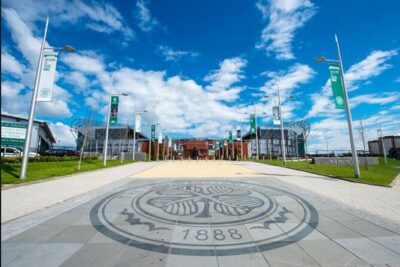 ★ 5.0Guided Celtic Park Stadium TourFrom $253,136 reviews
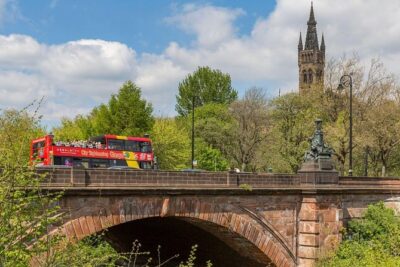 ★ 4.5City Sightseeing Glasgow Hop-On Hop-Off Bus TourFrom $271,873 reviews
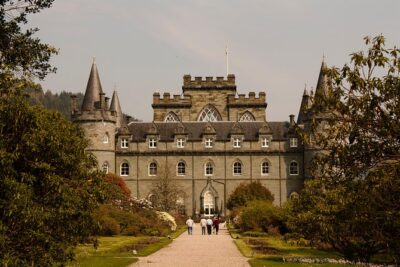 ★ 5.0Oban, Glencoe, Highlands Lochs & Castles Small Group Day Tour from GlasgowFrom $501,432 reviews
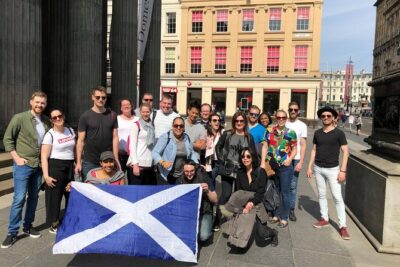 ★ 5.0Glasgow City Centre Walking Tour with Local GuideFrom $161,326 reviews
 ★ 5.0Loch Ness & the Highlands Day Tour from Glasgow Including CruiseFrom $831,211 reviews
 ★ 5.0Celtic Park Tour & Dine PackageFrom $60998 reviews
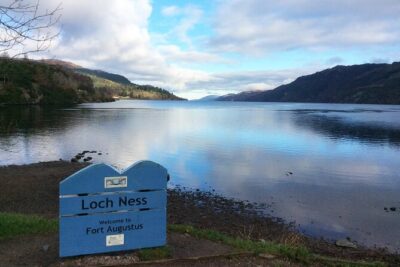 ★ 4.5Loch Ness, Glencoe, and the Highlands Day TourFrom $76806 reviews
 ★ 4.5Glasgow Afternoon Tea ExperienceFrom $61735 reviews
Browse the lists this tour appears in