
REVIEW · GLASGOW TOURS & DAY TRIPS
Glasgow Afternoon Tea Experience
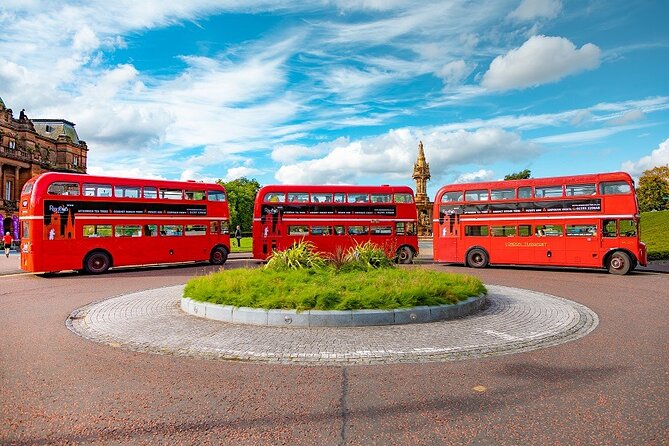
Tea tastes better when it is rolling. This Glasgow afternoon tea on a vintage Routemaster is a smart way to combine proper scones and sweets with a no-fuss sightseeing loop in about 70 to 90 minutes. I love that the food feels hand-made, not a basic snack, and I also like how the crew keeps the mood light with jokes and even a bit of singalong energy. The main drawback to plan around is comfort, seating can feel tight and there is no AC.
If you want a first-day overview, this is an easy win. You get to see a surprising pile of major stops from the bus windows, including George Square, Glasgow Cathedral, the Necropolis, and big Clyde engineering sights. Just know it is not built like a traditional guided tour with a deep history lecture every time you turn a corner.
The experience is run by a small crew, and names like Helen show up again and again, along with other friendly hosts such as Tallulah and George. They point out key sights and manage the dining, but the ride is still a dining experience first, so expect light talking rather than a full commentary marathon. One more practical note, there is no toilet on board, so go before you board.
In This Review
- Key highlights I’d pencil into your Glasgow plan
- Boarding the 1966 Routemaster at Shuttle Street
- Afternoon tea spread: sandwiches, warm scone, petit fours, and cupcakes
- Comfort reality check: tight seating, no AC, and no toilet on board
- Sightseeing without a lecture: how the route plays with dining
- George Square to the City Chambers: Glasgow’s civic drama from the window
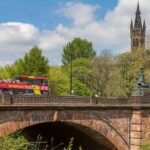
- Glasgow Cathedral and the Necropolis: medieval survival meets Victorian memorials
- Wellpark Brewery and the Tolbooth Steeple: local identity in plain sight
- Kelvingrove’s ceramic Doulton fountain and People’s Palace on Glasgow Green
- Clyde bridges and engineering icons: Kingston Bridge to the Clyde Arc
- Finnieston Crane, SEC Armadillo, and SSE Hydro: industry memory and modern venues
- Distillery views and the Riverside Museum area: modern Glasgow’s culture track
- Tennent’s Bar, the Hunterian Art Gallery, and University of Glasgow
- Kelvingrove Museum, Mitchell Library, and your easiest next-day walking plan
- Price and value at about $61.46 per person
- Who should book this Glasgow afternoon tea bus ride
- Should you book this Glasgow afternoon tea on a vintage bus?
- FAQ
- How long is the Glasgow afternoon tea experience?
- What is included in the afternoon tea?
- Is there gluten free or vegetarian options?
- Is there a toilet on the bus?
- Is there live commentary on the bus?
- What drinks are included besides tea?
- Where do I start and where do I end?
- How big is the group?
- Are service animals allowed?
Key highlights I’d pencil into your Glasgow plan
- A vintage Routemaster ride that turns transit into an event (and helps you save your legs).
- Handmade sandwiches, warm scone with cream and jam, plus sweets that actually feel like afternoon tea.
- Top sights from the bus windows, from the Cathedral and Necropolis to the Clyde bridges and cranes.
- Crew-led fun, with hosts who keep things upbeat, sometimes including singing along.
- Small group size (max 20), which keeps the vibe from getting too hectic.
Boarding the 1966 Routemaster at Shuttle Street
You start at 36 Shuttle St, Glasgow G1 1QA, and you come back to the same place at the end. The bus is a vintage Routemaster, kept in working order and adapted for afternoon tea service, which means you are riding real character, not a modern coach.
This is one of those experiences where your first five minutes set the tone. You will get seated for the meal, and then the sightseeing happens around it, as the bus rolls past major points of interest. On busy days, be prepared for table sharing, because the bus is built for a different era of seating.
The max group size is 20, so it does not feel like you are trapped in a stadium crowd. Still, this is shared space. Bring patience, and let the bus’s “old-school” layout do what it does.
Afternoon tea spread: sandwiches, warm scone, petit fours, and cupcakes
What you eat is the heart of the show. Your afternoon tea includes handmade sandwich selections and a home baked warm scone served with cream, jam, and a strawberry garnish. Then you get petit fours and cupcakes as the sweet finish.
In practice, this hits the right travel pattern. You are touring, so you want food that is satisfying but not hard to eat one-handed while you sit in a moving vehicle. The menu is clearly designed for that, and most people end up feeling properly stuffed instead of lightly snacking.
A nice detail is that tea and coffee are unlimited. This matters when you are doing a city loop, because you want a warm drink between stops, not just at the very start. If you are gluten free or vegetarian, you can request options, but you should specify needs when you book. Also note that products may contain nuts.
If you are picky about one element, flag it early. The crew is there to run the meal and help you have a good experience, but the overall pacing stays tight because the tour has a set duration.
What else runs out of Glasgow
- Guided Celtic Park Stadium Tour
★ 5.0 · 3,136 reviews - City Sightseeing Glasgow Hop-On Hop-Off Bus Tour
★ 4.5 · 1,873 reviews - Oban, Glencoe, Highlands Lochs & Castles Small Group Day Tour from Glasgow
★ 5.0 · 1,432 reviews - Glasgow City Centre Walking Tour with Local Guide
★ 5.0 · 1,326 reviews
Comfort reality check: tight seating, no AC, and no toilet on board
This is the part I would not sugarcoat. The bus has no toilet, so plan to use facilities before you meet up. Once you are underway, you are living inside the meal and the route, not hopping off for a break.
Second, there is no AC. The bus does have fans, but on hot afternoons you may still feel the heat. Some people love the vintage vibe, and some people feel the vintage vibe as “warm and close,” especially if you are in a tighter seat location.
Seating can vary depending on where you end up. You might get a setup where you are more compressed than you expected. If you want specific seating, the operator asks you to contact them rather than assuming you can choose everything on the day.
My advice, if comfort is your top priority, is to dress for weather extremes and expect the bus to feel like a bus. Lightweight layers help, and water is not listed as included, so have your own if you think you will need it.
Sightseeing without a lecture: how the route plays with dining
This is not a full guided tour with live narration on every turn. The operator is clear that there is no live or recorded guide commentary on the buses, though you may still hear some light talk and get point-outs of sights. In other words, think “sightseeing loop with a host,” not “deep-dive history tour.”
That actually works well for afternoon tea. You can glance at architecture, landmarks, and skyline views while you eat, then save the real research for museums or walking later. In Glasgow, the scenery changes quickly street to street, so the fast visual rhythm can be a feature.
If you like atmosphere, this part tends to land. Several experiences include a singalong moment and lots of host energy. It is not everyone’s style, but for many people it turns the ride from transport into a fun hour and a half.
George Square to the City Chambers: Glasgow’s civic drama from the window
From George Square, the bus heads toward one of Glasgow’s most imposing civic anchors: the City Chambers. This building’s look is tied directly to the city’s industrial prosperity, and it is one of those “you see it and instantly get why it is famous” spots.
From your seat, you get the big-picture effect without standing in crowds. You are not trying to read plaques while people elbow past you. Instead, you absorb the scale, and that helps when you later wander on foot.
If you are the type who likes to understand what you are seeing, use this moment as orientation. Notice the layout of the square and the surrounding street rhythm, then plan a short walk later if you want to go deeper.
Glasgow Cathedral and the Necropolis: medieval survival meets Victorian memorials
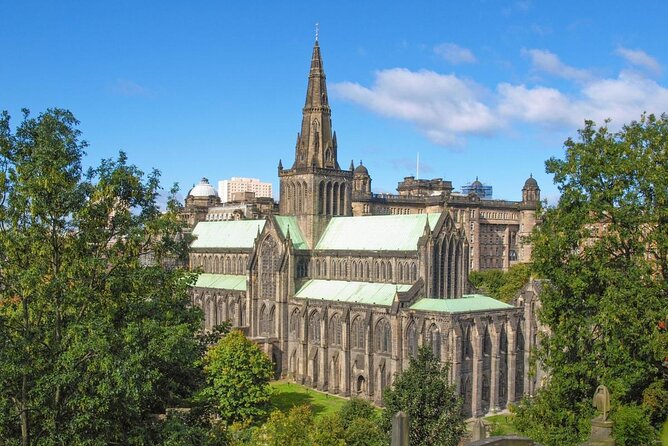
Glasgow Cathedral is a standout stop, and it has a specific kind of significance. It is the only cathedral on the Scottish mainland said to have survived the Reformation of 1560 intact. Even if you are not a church-history person, the building’s survival story adds weight to the view.
Right next door, you reach the Necropolis, a Victorian garden cemetery known for architecture, sculpture, and stories. It is modeled on Père-Lachaise in Paris, and it is massive, with an estimated 50,000 burials and around 3,500 tombs. Seeing it from the bus gives you a strong sense of how Glasgow grew and how it honored the dead as the city expanded.
Practical note, the Necropolis is dramatic, and it can feel extra intense from a moving vehicle. If you love photography, have your camera ready because the angles from the street can be better than you expect.
Eating and drinking your way round instead
Wellpark Brewery and the Tolbooth Steeple: local identity in plain sight
Tennent’s Wellpark Brewery shows up as a culturally important stop, with brewing dating back to 1885. This is one of those sights that helps you understand that Glasgow is not only stone monuments, it is also industry and everyday culture.
Then the bus threads toward the Tolbooth Steeple, Glasgow Cross’s most important feature. It sits on top of a clock and stone crown, and it used to be part of a larger building that included the Town Clerk’s office, council hall, and city prison.
If you are thinking, okay, where do I even start with Glasgow history, this route helps you prioritize. These are repeat names, and you will see them again when you start reading about the city on your own.
Kelvingrove’s ceramic Doulton fountain and People’s Palace on Glasgow Green
Kelvingrove Park is home to the Doulton fountain, described as the largest fountain ever constructed in ceramic. From the bus you might not get close enough for every detail, but you get the scale and the weirdly impressive material fact, which is the sort of thing that sticks in your head.
You also pass the People’s Palace on historic Glasgow Green. It is home to collections of objects, photographs, prints, and film showing how Glaswegians lived and worked, from past decades to today. Even a quick glance reminds you that this is a museum concept rooted in real people, not only elite stories.
This section is a good reset point in the ride. By the time you reach Glasgow Green, you have already seen medieval and civic icons, so switching to a social-history museum vibe feels like a natural change of pace.
Clyde bridges and engineering icons: Kingston Bridge to the Clyde Arc
Now you hit the River Clyde, and Glasgow’s engineering side takes over. Kingston Bridge is a busy balanced cantilever dual-span bridge carrying the M8 through central Glasgow. The scale is hard to judge on foot at street level, but from a moving bus you see the full width and how the city channels traffic.
Next comes the Clyde Arc, a road bridge connecting Finnieston to the SEC and science-focused areas in Govan. Its curved design and angled crossing make it feel more like modern architecture than plain infrastructure.
If you like structure, this is one of the better stretches. It turns the ride into a quick visual lesson on how Glasgow built around the river and kept moving.
Finnieston Crane, SEC Armadillo, and SSE Hydro: industry memory and modern venues
The Finnieston Crane, also called the Stobcross Crane, is a disused giant cantilever crane retained as an engineering symbol. It was used for loading cargo, including steam locomotives, onto ships for export. Even without leaving the bus, you can clock how it represents a whole era of industry.
Then you pass the SEC Armadillo, a distinctive venue designed by Foster + Partners. When it opened in 1997, it marked a new era for the SEC and the waterfront. It is one of those buildings that makes you think, Glasgow is not stuck in the past, it builds big shapes too.
SSE Hydro is the next major indoor arena landmark on the route. It is a multi-purpose venue at the Scottish Event Campus, and it originally carried the sponsor name Scottish Hydro. If you are visiting around concerts or events, this is a helpful mental map marker.
Distillery views and the Riverside Museum area: modern Glasgow’s culture track
The bus route includes Glasgow’s first dedicated single malt Scotch whisky distillery in over 100 years. That is a big cultural signal for a city that once felt mostly industrial and urban. Even a brief sighting helps you track the modern shift toward visitor-focused food and drink.
Riverside Museum is another key stop, and it is described as award winning with over 3,000 objects. The collection spans transport and includes everything from skateboards and locomotives to prams and cars, even a Stormtrooper. You might not be touring inside during this hour and a half, but you get the sense of why it has become a go-to family museum.
Nearby, you also pass Glasgow Tower, part of the Glasgow Science Centre complex. It is a clear visual anchor for the science and tech vibe that sits along the Clyde in this area.
Tennent’s Bar, the Hunterian Art Gallery, and University of Glasgow
Back closer to the city core, the route includes Tennent’s Bar, a much-loved city centre pub offering great beers and tasty food with lively local energy. It is described as one of the last traditional pubs in Glasgow’s West End, so it carries an important “old Glasgow” feel.
The Hunterian Art Gallery is another major art stop on the loop. It has a public art collection in Scotland with works ranging from Rubens and Rembrandt to Scottish Colourists and Glasgow Boys. If you already know you want museum time, this is a useful preview that helps you decide whether to focus on art or science later.
The University of Glasgow is also on the route. It has been changing the world since 1451, and the description names figures like Adam Smith, James Watt, and Lord Kelvin. That is a reminder that Glasgow is not only architecture and rivers, it is ideas and research too.
Kelvingrove Museum, Mitchell Library, and your easiest next-day walking plan
Kelvingrove Museum and Art Gallery is listed as a firm favourite since it opened in 1901, with family-friendly energy. From the bus, you may catch the exterior and the park setting, which helps you picture it as a daytime stop.
Then the route heads toward Charing Cross and the Mitchell Library, a major library landmark in Glasgow’s library network. It is noted for fine collections available to the public, including Scottish and international materials, plus support for new and growing businesses. If your travel style includes research, reading spaces, or just quiet time, this is a great follow-up idea.
By the end of the loop, you are usually not craving more monuments. You are craving a plan. I like using this tour as the map phase, then choosing one neighborhood walk and one museum visit afterward.
Price and value at about $61.46 per person
At roughly $61.46 per person, you are paying for a package: a vintage bus ride plus a full afternoon tea spread with unlimited tea and coffee. The value question is really about priorities.
If you want a quick overview of Glasgow with a meal included, this is a good deal. You are not paying for transport plus food separately, and the small group size helps keep it from feeling like a mass-market cafeteria outing.
If you care more about deep guided storytelling, the price might feel high because the experience does not run like a narrated history tour. You will see lots of key places, but you are not getting a heavy lecture around every corner.
I also think the food matters here. The sandwich variety, warm scone with cream and jam, and the sweet trio of petit fours and cupcakes are the kind of afternoon tea components that are hard to replicate cheaply on your own while you are moving around.
Who should book this Glasgow afternoon tea bus ride
This is best for:
- First-time visitors who want fast orientation without long walks
- People traveling with someone who wants food as part of the plan
- Rainy-day planners, because this is time spent inside a moving vehicle
- Groups who want a fun, light atmosphere with hosts such as Helen
It may be less ideal for:
- Anyone who requires climate control, because there is no AC
- People who strongly prefer a fully narrated tour style
- Folks who need frequent restroom stops, since there is no toilet on board
Should you book this Glasgow afternoon tea on a vintage bus?
I’d book it if you want a day that feels easy and a bit whimsical. You get a real afternoon tea set-up, a vintage ride that turns sightseeing into a shared event, and a route that hits a ton of Glasgow landmarks in a short time.
I would hesitate only if you are very sensitive to heat and tight seating, or if you expect a traditional guided commentary tour. If that is you, consider pairing a shorter food-focused activity with a separate, more structured walking tour.
If you are flexible and travel for experiences, not just checklists, this one is a fun way to spend an afternoon in Glasgow.
FAQ
How long is the Glasgow afternoon tea experience?
The tour lasts between 70 to 90 minutes depending on conditions.
What is included in the afternoon tea?
Handmade sandwich selections, a warm scone with cream and jam (with strawberry garnish), petit fours, cupcakes, and unlimited tea and coffee.
Is there gluten free or vegetarian options?
Yes. You can choose gluten free or vegetarian options, and you should specify requirements at reservation. Products may contain nuts.
Is there a toilet on the bus?
No, there is no toilet on board.
Is there live commentary on the bus?
No. The operator states there is no live or recorded guide commentary on the buses.
What drinks are included besides tea?
Unlimited tea & coffee are included. A souvenir drinks cup is not included.
Where do I start and where do I end?
It starts at 36 Shuttle St, Glasgow G1 1QA, and ends back at the same meeting point.
How big is the group?
The experience has a maximum of 20 travelers.
Are service animals allowed?
Yes, service animals are allowed.
The Rest of What We Wrote Up


Fed and Watered as You Go

What Else Leaves Glasgow
Newest write-ups around Glasgow
- The Scottish Highlands Photography Tour & Workshop★ 5.0 · 3 reviews
- Scottish Highland Day Tour from Glasgow★ 5.0 · 3 reviews
- Whisky Adventure – Private Day Tour from Glasgow★ 5.0 · 3 reviews
- 3 Day Isle of Skye Eilean Donan Castle and Loch Ness Tour★ 5.0 · 3 reviews
- Pints & Past: Glasgow Pub Tour Private Tour★ 5.0 · 3 reviews
Glasgow Tours & Day Trips, compared.
 ★ 5.0Guided Celtic Park Stadium TourFrom $253,136 reviews
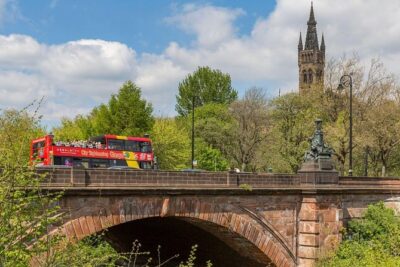 ★ 4.5City Sightseeing Glasgow Hop-On Hop-Off Bus TourFrom $271,873 reviews
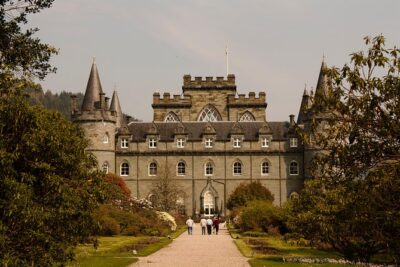 ★ 5.0Oban, Glencoe, Highlands Lochs & Castles Small Group Day Tour from GlasgowFrom $501,432 reviews
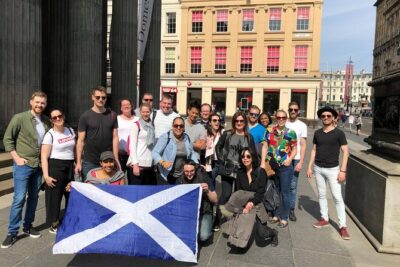 ★ 5.0Glasgow City Centre Walking Tour with Local GuideFrom $161,326 reviews
 ★ 5.0Loch Ness & the Highlands Day Tour from Glasgow Including CruiseFrom $831,211 reviews
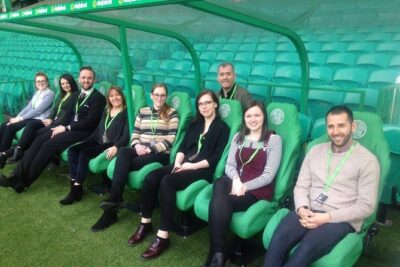 ★ 5.0Celtic Park Tour & Dine PackageFrom $60998 reviews
 ★ 4.5Loch Ness, Glencoe, and the Highlands Day TourFrom $76806 reviews
 ★ 5.0Glasgow Street Art Daily Walking Tour: 2pmFrom $19648 reviews
Browse the lists this tour appears in