
REVIEW · GLASGOW TOURS & DAY TRIPS
2.5 Hour Football Walking Tour in Glasgow
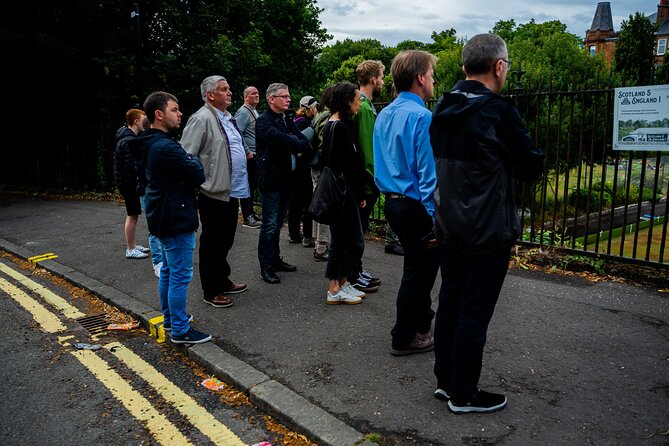
Football origins show up on foot in Glasgow. This 2.5 hour route takes you to the Hampden Park story that shaped the passing and running game, and connects it to a worldwide obsession with football. I especially like the stop-by-stop focus on real places, not just vague legends.
The big consideration is simple: it runs outdoors and requires good weather, and the listing notes that an admission ticket is not included, so you may want to plan for that if any stop has a paid entry. Still, if the day is decent, this is a smart, story-rich use of a morning in Glasgow.
In This Review
- Key things to know before you go
- Why the Hampden parks matter more than you think
- Queens Park Recreation Ground: the roots in plain sight
- The first Hampden site at Hampden Bowling Club and the 1882 mural
- Cathkin Park: abandoned terracing and the lesson of change
- Hampden Park, the Rose Reilly mural, and the modern blueprint
- What the 2 hours with the guide actually feels like
- Price and value at $33.94: what you’re really paying for
- Practical tips for a smooth Hampden parks morning
- Who should book this tour, and who might skip it
- Should you book the 2.5 hour Glasgow football walking tour?
- FAQ
- How much does the 2.5 hour football walking tour cost?
- How long is the tour?
- Where is the meeting point, and what time does the tour begin?
- Where does the tour end?
- Is the tour in English?
- What is the maximum group size?
- What is included in the tour price?
- What is not included?
- What happens if weather is poor or you need to cancel?
Key things to know before you go
- Three Hampden parks in one walking loop: Queens Park, then the first and second Hampden sites, and finally the third Hampden Park.
- Clear football culture landmarks: you’ll see the Hampden Bowling Club area and look out for the historic mural themes tied to specific matches.
- Cathkin Park terracing: an abandoned stadium site helps you understand how football grounds evolved.
- A guide-led timeline: the tour tells the birth, modernisation, successes, and failures of the game with an experienced local guide.
- Small group size: capped at a maximum of 20 people, which keeps the pace more conversational.
Why the Hampden parks matter more than you think
Glasgow is one of the world’s best cities for football storytelling, because the game is literally built into the streets. This walk concentrates on the places often described as the cradle of the modern passing and running game, a style developed by Scots over centuries and now enjoyed by 3.5 billion people worldwide.
What I like about this tour is that it doesn’t treat football like a generic sport. It frames the grounds as an invention process, where ideas about playing, crowding, and watching football get tested and then copied.
You’ll also get a bigger perspective fast. Even if you’re only a casual fan, you’ll start seeing football grounds as tools that shaped the way teams play and the way fans experience the match.
Queens Park Recreation Ground: the roots in plain sight
The walk begins at 16 Queen’s Dr, near the Queen’s Park Recreation Ground, a place tied to the early stages of the “modern” style of football. This is the first stop, and it matters because it sets the foundation before you move into the named Hampden locations.
At this stage, your guide’s job is to make the route make sense. You’re not just looking at grass and fences. You’re learning why these grounds mattered in the first place, and how football’s methods evolved as the game spread.
One practical perk here: because you start with an early-stage site, you’re less likely to feel lost. The tour builds a timeline in your head as you go, so each later stop feels like a “next chapter,” not random sightseeing.
What else runs out of Glasgow
- Guided Celtic Park Stadium Tour
★ 5.0 · 3,136 reviews - City Sightseeing Glasgow Hop-On Hop-Off Bus Tour
★ 4.5 · 1,873 reviews - Oban, Glencoe, Highlands Lochs & Castles Small Group Day Tour from Glasgow
★ 5.0 · 1,432 reviews - Glasgow City Centre Walking Tour with Local Guide
★ 5.0 · 1,326 reviews
The first Hampden site at Hampden Bowling Club and the 1882 mural
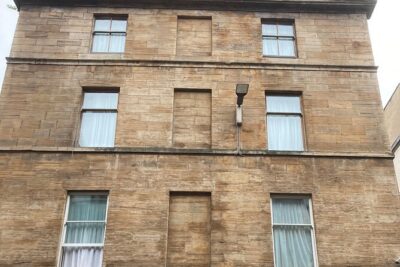
Next, you move to the Hampden Bowling Club, tied to the first Hampden Park. This is where the tour gets much more specific, because the experience includes a focus on the 1st Hampden mural connected to Scotland beating England 5-1 on 11 March 1882.
That match detail is the kind of thing that turns football memory into something you can point to. Instead of just hearing that the 1800s were important, you get an actual date and score to carry with you. It also helps you understand how these grounds weren’t just local spaces. They were stages where rivalries and national pride played out.
If you like sports in a way that’s more than results, you’ll probably enjoy this stop the most. It shows how football culture leaves marks, including art, not just trophies.
Potential drawback here: if you’re expecting a full indoor museum style experience, this is more about looking and learning on the ground. You’ll want to stay mentally switched on, because the meaning comes from the guide’s storytelling.
Cathkin Park: abandoned terracing and the lesson of change
After the first Hampden, the route takes you to Cathkin Park, linked to the second Hampden Park. This stop is described as an abandoned stadium with original terracing, which is a big deal if you care about how football grounds changed over time.
When a stadium is abandoned, you can easily overlook it. But the terracing is the point. Those old shapes show you what football crowds needed at the time, and how design followed the way the game was played and watched.
This stop also gives the tour its more reflective tone. The overall story includes successes, failures, and modernisation, and abandoned sites are often where you feel that change most clearly. It’s a reminder that progress is rarely a straight line.
What you’ll likely appreciate as you walk: the tour doesn’t pretend everything was perfect. It shows the ground as a living experiment that sometimes leaves ruins behind.
Hampden Park, the Rose Reilly mural, and the modern blueprint
Your final visit is to Hampden Park (the third). You’ll finish on Letherby Dr, which keeps the walk anchored to the real, current stadium footprint rather than ending somewhere vague.
This stop includes the Rose Reilly mural, and it brings the story forward into more recent football memory. That’s useful, because it prevents the tour from becoming a time capsule. You learn why early templates mattered, then you see how public art and place-based storytelling keep football identity alive.
Here’s what I think this last section accomplishes. It helps you connect the dots between old ground features and the modern stadium experience. Once you’ve seen roots and offshoots, you can better understand why stadiums today look the way they do, from the crowd setup to the “match day” rhythm.
And since the tour ends at Hampden Park, you can easily extend the day. Even if you don’t go into the stadium, you still have that satisfying feeling of arriving at the headline location after learning why it earned that status.
What the 2 hours with the guide actually feels like
The tour is listed as approximately 2 hours 30 minutes, with 2 hours focused on the story with your guide. That difference matters. The extra time is the walking and transitions between sites, so you’re not sprinting between landmarks, but you are staying in motion.
Your guide is described as passionate and knowledgeable, and the format is built around the football narrative: the birth of the game, its modernisation, its success, and its failures. In practice, that means you get more than facts about locations. You get cause and effect, like how style of play and stadium needs grew together.
Group size is capped at 20, which is ideal for a walking tour. You’ll have a chance to hear the guide clearly without fighting crowd noise, and it’s easier for questions to land.
English is the offered language, so if you’re comfortable in English, you’ll likely follow the story smoothly without translation delays.
More ground covered on foot




Price and value at $33.94: what you’re really paying for
At $33.94 per person, this is not a budget “just walk and look” experience. You’re paying for a local guide and a structured route that turns outdoor sightseeing into a football timeline.
Is it worth it? For the right traveler, yes, especially if you like your sports with context. Instead of spending money on a single match or a generic walking tour, this gives you a focused theme: football grounds and the way they shaped the game.
The best value angle is the conversion of time into meaning. Two and a half hours in central Glasgow is usually enough for a few landmarks, but those landmarks can feel disconnected. Here, they’re linked into one narrative, and that makes the whole walk feel tighter and more satisfying.
Where you might question value: if you only want casual views of stadium exteriors and you’re not interested in the story of football evolution. In that case, you could probably do it on your own with less cost. But if you enjoy sports history as a living story, the guided format is the point.
Also remember: admission ticket is not included. So if any stop requires paid entry for something specific, you may have to cover that separately.
Practical tips for a smooth Hampden parks morning
Start with the simple stuff, because it affects your comfort more than you’d think.
- Wear good walking shoes. You’re moving between grounds and streets, and the route includes an abandoned stadium site with terracing, which can be uneven.
- Check the weather before you commit. The tour requires good weather, and if it’s canceled due to poor conditions, you’ll be offered a different date or a full refund.
- Plan for outdoor time. This is not described as an indoor tour with short stops. You’re outside a lot, so dress like you’re walking across Glasgow, not just popping out for photos.
For meeting and ending, here are the exact anchors you’ll need in your maps app:
- Start: 16 Queen’s Dr, Glasgow G42 8BS
- End: Hampden Park, Letherby Dr, Glasgow G42 9BA
- Start time: 10:30 am
The tour is near public transportation, so you’re not forced into a car schedule. And since confirmation is received at booking, you should be able to show up with your mobile ticket plan in mind.
If you’re traveling with a service animal, the tour allows it, and most people can participate, since it’s a walking format with a route through accessible public spaces.
Who should book this tour, and who might skip it
Book this if you want football culture with a strong sense of place. This walk is a great fit for:
- football fans who like how the game developed, not just who won
- people who enjoy murals, stadium design, and tangible local storytelling
- first-time visitors to Glasgow who want one focused, theme-driven tour that still feels authentic
You might skip it if:
- you want a heavy indoor component or a museum-style experience
- you’re traveling with limited patience for walking between outdoor sites
- you only care about modern match day and have no interest in football’s evolution
The route ends at Hampden Park, so even if you’re not attending a match, you get that satisfying payoff of finishing where the story culminates.
Should you book the 2.5 hour Glasgow football walking tour?
I’d book it if you value a guided story that connects multiple sites into one timeline. The route hits major stops tied to early football evolution, and the inclusion of specific match context like Scotland 5-1 England in 1882, plus visible landmarks like the Rose Reilly mural, gives the walk strong anchors.
Also, small group size matters here. With a maximum of 20 people, the experience should feel tighter and easier to follow than a larger bus tour.
Just make sure you’re choosing a day with good weather, since that’s a real requirement for this kind of outdoor walking tour. If the weather cooperates and you like football as culture, this is a solid use of a half day in Glasgow.
FAQ
How much does the 2.5 hour football walking tour cost?
The price is $33.94 per person.
How long is the tour?
The tour runs for about 2 hours 30 minutes, with around 2 hours of guided storytelling.
Where is the meeting point, and what time does the tour begin?
You meet at 16 Queen’s Dr, Glasgow G42 8BS. The start time is 10:30 am.
Where does the tour end?
The tour ends at Hampden Park, Letherby Dr, Glasgow G42 9BA.
Is the tour in English?
Yes, the tour is offered in English.
What is the maximum group size?
The tour has a maximum of 20 travelers.
What is included in the tour price?
The tour includes a passionate, knowledgeable local guide.
What is not included?
Private transportation is not included. Admission ticket is also noted as not included.
What happens if weather is poor or you need to cancel?
The tour requires good weather. If it is canceled due to poor weather, you’ll be offered a different date or a full refund. You can cancel for a full refund if you cancel at least 24 hours before the experience start time.
A Wider Spread of Tours




The Rest of What We Wrote Up
What Else Leaves Glasgow
Newest write-ups around Glasgow
- The Scottish Highlands Photography Tour & Workshop★ 5.0 · 3 reviews
- Scottish Highland Day Tour from Glasgow★ 5.0 · 3 reviews
- Whisky Adventure – Private Day Tour from Glasgow★ 5.0 · 3 reviews
- 3 Day Isle of Skye Eilean Donan Castle and Loch Ness Tour★ 5.0 · 3 reviews
- Pints & Past: Glasgow Pub Tour Private Tour★ 5.0 · 3 reviews
Glasgow Tours & Day Trips, compared.
 ★ 5.0Guided Celtic Park Stadium TourFrom $253,136 reviews
 ★ 4.5City Sightseeing Glasgow Hop-On Hop-Off Bus TourFrom $271,873 reviews
 ★ 5.0Oban, Glencoe, Highlands Lochs & Castles Small Group Day Tour from GlasgowFrom $501,432 reviews
 ★ 5.0Glasgow City Centre Walking Tour with Local GuideFrom $161,326 reviews
 ★ 5.0Loch Ness & the Highlands Day Tour from Glasgow Including CruiseFrom $831,211 reviews
 ★ 5.0Celtic Park Tour & Dine PackageFrom $60998 reviews
 ★ 4.5Loch Ness, Glencoe, and the Highlands Day TourFrom $76806 reviews
 ★ 4.5Glasgow Afternoon Tea ExperienceFrom $61735 reviews
Browse the lists this tour appears in