
REVIEW · GLASGOW TOURS & DAY TRIPS
The Magnificent and Mysterious History of Glasgow
Glasgow hides drama in plain stone. This is a tight, well-paced walk that links big civic buildings, famous writers, old religious sites, and a few oddball stops that make the city feel alive. You’ll also get a feel for why Merchant City Glasgow became the place it is today.
I love the stop-to-stop structure here because it gives you quick orientation, then rewards you with variety, from statues to museums. I also love the storytelling style many guides use, including Henry Bell or Bruce, with clear explanations, dry humor, and just enough detail to keep moving.
One consideration: it is a lot to take in during about 2.5 hours, and the walk does not end back at George Square. If you want a slow stroll and lingering photos at every doorway, you may feel rushed.
In This Review
- Key highlights worth your attention
- Why this Glasgow walk starts with City Chambers and ends with St Mungo
- The route in plain English, from George Square to Ingram Street
- Stop-by-stop: what you’ll see and what to pay attention to
- Stop 1: Glasgow City Chambers
- Stop 2: Glasgow War Memorial
- Stops 3 and 4: Sir Walter Scott and Robert Burns statues
- Stop 5: Merchant’s House
- Stop 6: Gallery of Modern Art
- Stop 7: Duke of Wellington statue
- Stop 8: Paesano Pizza
- Stop 9: Trades Hall of Glasgow
- Stop 10: The candle makers street
- Stop 11: The Corinthian Club
- Stop 12: Saints of Ingram
- Stops 13 and 14: Trongate 103 and Britannia Panopticon Music Hall
- Stop 15: Mercat Cross
- Stop 16: High Street, St Mungo murals, and old university clues
- Stops 17 and 18: David Livingstone, then Ramshorn Theatre
- Stop 19: Friends of Glasgow Royal Infirmary Museum
- Stop 20 to 22: Glasgow Cathedral, Provand’s Lordship, and St Mungo Museum
- Pace, group size, and what to do if you lose the thread
- Value for money: what $17.91 buys you in Glasgow
- Weather, renovations, and why flexibility matters
- After the tour: using the ending point to keep your day smart
- Should you book this Glasgow history walk?
- FAQ
- How long is the Glasgow history tour?
- Where does the tour start?
- Where does the tour end?
- Is the tour in English?
- Is the tour mostly walking?
- How much does it cost?
- Are there admission tickets included?
- What is the group size?
- Does the tour require good weather?
- Is free cancellation available?
Key highlights worth your attention
- City Chambers first, a grand building that sets the tone for 19th century Glasgow.
- Multiple statue moments for Walter Scott and Robert Burns, plus the Burns monument story.
- A Guinness of variety, architecture, street murals, a music hall, and cathedral-era sites.
- Music history at Britannia Panopticon, with a connection to Stan Laurel.
- Cathedral finale, with Glasgow Cathedral and Provand’s Lordship before St Mungo Museum.
- Small group size (max 15), which usually helps you hear the guide and stay together.
Why this Glasgow walk starts with City Chambers and ends with St Mungo
If you’re trying to get your bearings fast, this route is a smart shortcut. It begins in the civic heart of Glasgow at George Square, with City Chambers as the visual anchor. Then it fans out through Merchant City, where you see how power, trade, religion, and culture layered over centuries.
This tour also works because it mixes scales. You get grand stone and public monuments, but you also get “how people lived” details, like merchant wealth, trade communities, and the way different streets formed around practical needs such as fire risk. Then it closes with the heavy-hitter spiritual sites, Glasgow Cathedral and Provand’s Lordship, followed by St Mungo Museum of Religious Life and Art.
Guides like Henry Bell and Bruce tend to keep it conversational. You’re not just reading plaques, you’re getting the logic behind them, why these buildings matter, and how the city’s self image has shifted over time.
The route in plain English, from George Square to Ingram Street
The meeting point is George House, 50 George Square. The walk then weaves through the center, ending at 98 Ingram St, outside the Ramshorn Church area on Ingram Street. That end point matters for your plans, because you’ll likely want to keep exploring afterward, rather than walking back immediately.
Even with the walking time between stops totaling around 40 to 45 minutes, the overall experience takes longer because you pause often. Many stops are short, a few minutes each, but the guide narration keeps filling the gaps. Expect roughly 2 hours 4 minutes to 2 hours 14 minutes on the schedule, with about 2.5 hours in real life depending on pace, questions, and time inside.
You’ll be on foot most of the time. It’s designed for most travelers, and service animals are allowed. Still, it’s a good idea to wear shoes you trust, bring a light layer, and plan for Scotland’s quick weather swings since the tour requires good weather.
What else runs out of Glasgow
- Guided Celtic Park Stadium Tour
★ 5.0 · 3,136 reviews - City Sightseeing Glasgow Hop-On Hop-Off Bus Tour
★ 4.5 · 1,873 reviews - Oban, Glencoe, Highlands Lochs & Castles Small Group Day Tour from Glasgow
★ 5.0 · 1,432 reviews - Glasgow City Centre Walking Tour with Local Guide
★ 5.0 · 1,326 reviews
Stop-by-stop: what you’ll see and what to pay attention to
Stop 1: Glasgow City Chambers
City Chambers is the kind of place that makes you stand still without trying. It’s the Glasgow City Council headquarters, and the building’s sculptures reflect how Glaswegians saw themselves in the 1800s. Look closely at the details the guide points out. They’re not decoration for decoration’s sake, they’re messaging.
Stop 2: Glasgow War Memorial
Next comes a more solemn note with Glasgow’s First World War memorial. The power here is symbolism, not spectacle. This stop is brief, but it helps you understand Glasgow as a city shaped by loss and collective memory, not just industry and architecture.
Stops 3 and 4: Sir Walter Scott and Robert Burns statues
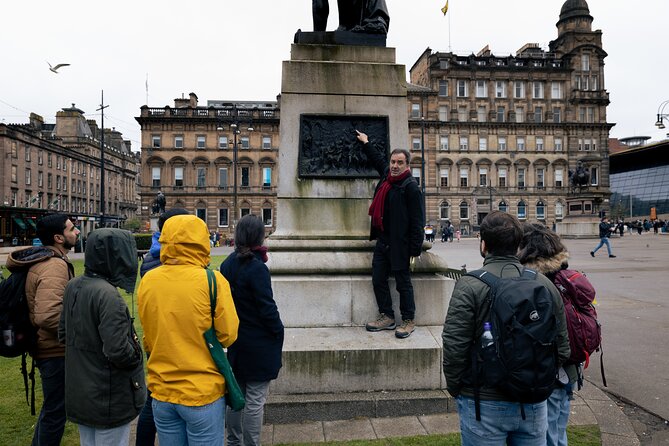
George Square keeps delivering. The Sir Walter Scott statue nods to Scotland’s writers and the way modern ideas of Scotland were shaped. Then Robert Burns appears with one of the best story-in-a-statue moments: the first-ever Burns monument to Scotland’s national poet, supported through an early crowdfunding approach.
If you like “how the public made history,” pay attention here. The unveiling drew thousands, and that scale helps you see Burns as a shared civic symbol, not just a literary name.
History-led days, told differently

Stop 5: Merchant’s House
Merchant’s House connects the city’s self image to trade. The Merchants of Glasgow helped create much of the prosperity behind modern Glasgow, and this building gives you a tangible snapshot of their status. Even if you only see the exterior, the guide narration makes it clearer what kind of power lived behind walls like these.
Stop 6: Gallery of Modern Art
This one surprises people. The Gallery of Modern Art started life as a private mansion house, then changed uses over time. That shift mirrors Glasgow itself, where big houses, institutions, and commerce repeatedly reinvented their purpose. It’s a nice reminder that “old” buildings didn’t always stay old.
Stop 7: Duke of Wellington statue
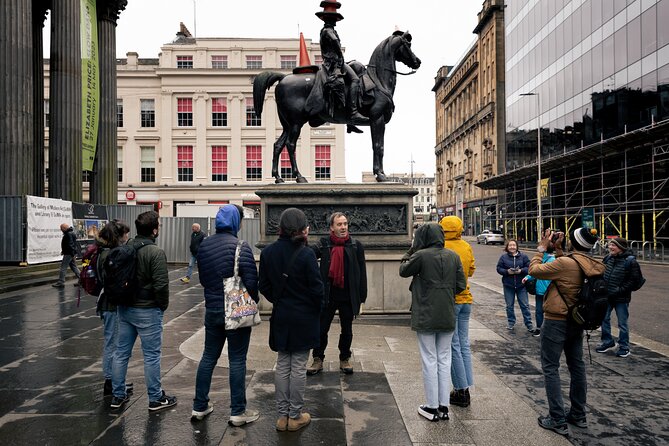
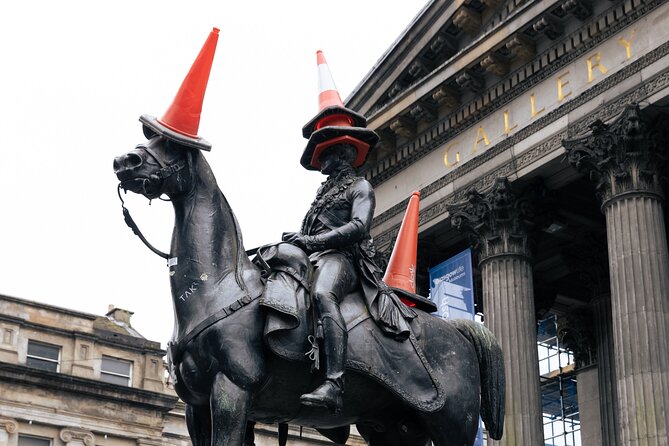
Glasgow’s public statues are full of personality, and this is one of the best examples. The Duke of Wellington statue is famous for the traffic cone that ends up on his head. It’s a small moment, but it tells you something real about the city’s humor and how residents interact with landmarks.
Stop 8: Paesano Pizza
Yes, a pizza stop. Paesano Pizza is one of the most popular pizza joints in Glasgow, and the story tied to it is that the place once had a special kind of job opportunity. Don’t expect a long food break. This is more about adding local color so the tour doesn’t feel like a museum-only day.
Stop 9: Trades Hall of Glasgow
Now you shift to the work-and-community side of Glasgow. Trades Hall represented traders across trades such as carpenters, tanners, and dyers, and it supported members who were too old to keep working. If you care about how cities function beyond big money, this is one of the stops that can quietly stick with you.
Stop 10: The candle makers street
This is an important street from medieval Glasgow, associated with candle makers. The original idea included separating this work from the old town to reduce fire risk, then the area later served markets and warehouses. Today it’s part of the cultural district.
This stop is short, but it’s a great example of how planning shows up in street history. Even if you don’t know medieval Glasgow, you can probably picture why a fire-safe design mattered.
Stop 11: The Corinthian Club
The Corinthian Club has had a few lives already: bank, courthouse, and county building, before becoming a club and wedding venue. That mix tells you how civic buildings adapt as the city’s priorities change. It also gives you a useful mental model for Merchant City Glasgow, where institutions often get re-used rather than erased.
Stop 12: Saints of Ingram
Saints of Ingram is a reminder that Glasgow’s charitable and religious systems were intertwined with civic identity. Along with the Merchants House and the Trades House, the Hutchenson’s Hospital is described as one of the three graces of Glasgow. The point is care and community support, not just belief.
Stops 13 and 14: Trongate 103 and Britannia Panopticon Music Hall
Trongate 103 is an arts centre in the heart of the city, home to attractions including the Sharmanka Kinetic Gallery. This is where the tour nudges you toward the modern Glasgow cultural scene.
Then comes Britannia Panopticon Music Hall, which is the world’s oldest surviving music hall. It also connects to a young Stan Laurel, one half of the famous comedy duo. If you like entertainment history, this is a standout.
Stop 15: Mercat Cross
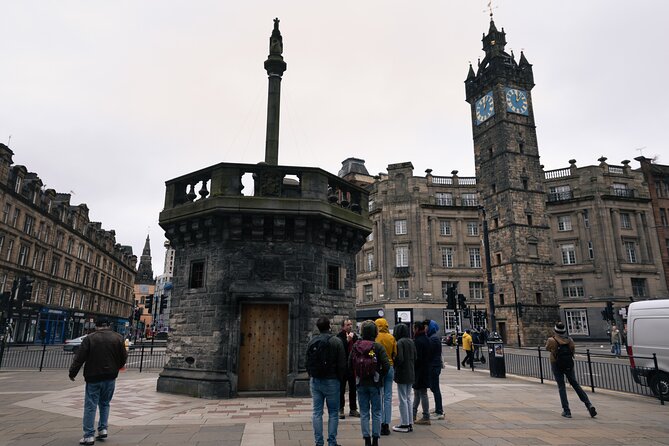
Mercat Cross is a recreation of a medieval market cross where proclamations were made. Even in a short stop, the idea is clear: public announcements weren’t delivered via screens, they were delivered in person at a symbolic meeting point.
Stop 16: High Street, St Mungo murals, and old university clues
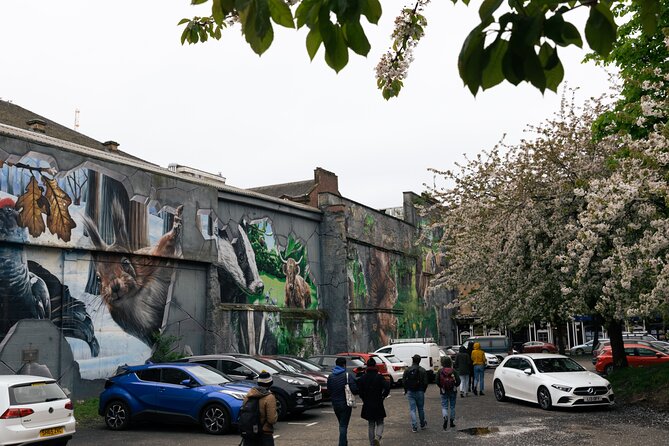
High Street is the medieval core. The route includes sites you can link to St Mungo, plus significant buildings and even the location of the old University of Glasgow, described as the fourth oldest in Britain. Two murals tied to St Mungo add a modern layer to a medieval street.
This stop is a bit longer, around 15 minutes, so it’s a good moment to slow down and take in the visual rhythm of the street.
Stops 17 and 18: David Livingstone, then Ramshorn Theatre
David Livingstone’s statue is placed with intention, and the tour notes that it originally stood in George Square. That movement helps you understand how the city repositions its symbols over time.
Ramshorn Theatre opened in 1824, replacing an earlier church on the same site. Many notable Glaswegians were buried there, and in recent years the building has served as a theatre and now as a language studies centre owned by the University of Strathclyde. It’s another example of layers, religious, cultural, and educational.
Stop 19: Friends of Glasgow Royal Infirmary Museum
This connects the walk to science and medicine. The Glasgow Royal Infirmary is described as the oldest hospital in Glasgow, with medical innovations pioneered there. Even if you only take in the gist from outside, the stop helps you balance out the city’s art and music with real-world impact.
Stop 20 to 22: Glasgow Cathedral, Provand’s Lordship, and St Mungo Museum
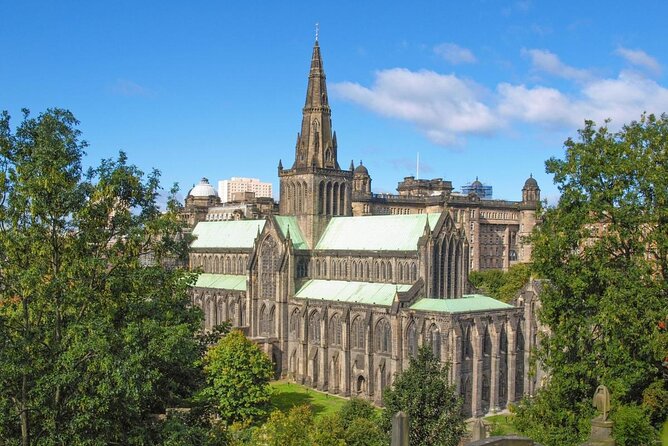
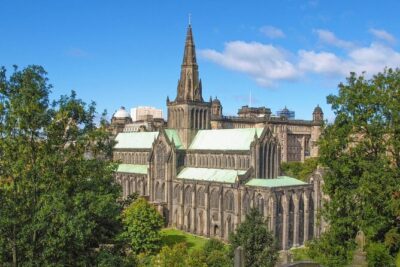
Now you get the finale that turns the tour from “city stories” into “deep time.” Glasgow Cathedral dates back to the 13th century, and a church has been on the site since the 6th century. Expect about 20 minutes here, including time inside the oldest building in Glasgow.
Provand’s Lordship follows at about 5 minutes, noted as one of the oldest buildings apart from the Cathedral, dating back to the 14th century. Then St Mungo Museum of Religious Life and Art closes the tour with a museum that celebrates different religions followed around the world. The building is designed to look much older than it is, which makes the museum feel like part of the same story as the Cathedral.
Pace, group size, and what to do if you lose the thread
A big part of the joy here is that guides tend to keep things moving without turning it into a race. In practice, the pace is described as quick but comfortable, with a direct style and a lot of humor. That’s useful if you’re the kind of person who gets distracted by fluff.
The group size is capped at 15, which helps with listening and staying oriented. Still, this is a packed route. If it’s raining, or if you’re a little hard of hearing, you may miss a few details. If that happens, it helps to focus on the physical clues the guide points out, like sculpted sections on City Chambers or the “why” behind a medieval street plan.
Also, remember this is not a loop back to where you started. Plan your day so you have time after the finish on Ingram Street. You’ll likely want a wander without rushing.
Value for money: what $17.91 buys you in Glasgow
At about $17.91 per person, you’re buying a guided threading of the city’s center. The tour is short enough to fit nearly any itinerary, but long enough to cover a lot of visual variety: civic power, literary icons, trade communities, music history, and then medieval and religious sites.
A key value lever is that many stops are listed as free admission ticket stops. In plain terms, that means you’re not paying extra for every single “must-see” on the route. It’s a smart way to control your daily spending while still seeing inside at least the most important sites, like the Cathedral.
The schedule is also efficient. Many stops are only a few minutes, so you’re not waiting around for long explanations at one location. You get story momentum across the route, which makes the whole walk feel like a single chapter rather than a pile of disconnected stops.
Weather, renovations, and why flexibility matters
This tour requires good weather. If rain is heavy or visibility is poor, the experience can feel harder, because you’re outside between stops.
There’s another practical reality too. Some parts of central Glasgow periodically go through construction. On days when a nearby building or access point is limited, the guide may still keep the group moving and may focus on what you can see safely and from where you are. That’s not a reason to skip the tour, it’s just a reason to keep expectations flexible. If you’re the kind of traveler who wants guaranteed entry everywhere, treat it as a highlights walk, not a promise of every interior space.
After the tour: using the ending point to keep your day smart
Because the tour ends on Ingram Street near the Ramshorn Church area, I like using it as a launchpad. If you still have energy, you can turn your remaining time into a self-guided stroll through whatever interests you most from the tour, like the High Street area murals or the Cathedral vicinity.
If you’re hopping to another activity the same day, build in a buffer. The tour runs about 2.5 hours, and time can stretch if the guide takes questions or if a few group members need a moment to keep up. A small buffer keeps the rest of your schedule stress-free.
Should you book this Glasgow history walk?
Book it if you want a high-signal orientation walk that covers Merchant City and the Cathedral zone in one outing. It’s especially appealing if you like stories tied to real places, with guides who keep it funny and clear, like Henry Bell or Bruce.
Skip it or choose another option if you want a slow, deep research pace at a single building. This is a “see a lot in one go” tour. Also, if you hate walking in light rain, plan around the weather requirement and bring the gear.
My practical take: if this fits your schedule, it’s a strong first-day move in Glasgow. You’ll come away with a map in your head, a better sense of who built what, and a short list of places worth revisiting later.
FAQ
How long is the Glasgow history tour?
It runs for about 2 hours 4 minutes to 2 hours 14 minutes on the schedule, with an approximate total experience time closer to 2.5 hours.
Where does the tour start?
The meeting point is George House, 50 George Square, Glasgow G2 1EH.
Where does the tour end?
The tour ends at 98 Ingram St, Glasgow G1 1EX, outside the Ramshorn Church on Ingram Street.
Is the tour in English?
Yes, it is offered in English.
Is the tour mostly walking?
Yes. You’ll have walking time between attractions, around 40 to 45 minutes, and you’ll be outside between stops.
How much does it cost?
The price is listed as $17.91 per person.
Are there admission tickets included?
Many stops list free admission ticket notes, and the tour includes entry opportunities at locations such as Glasgow Cathedral.
What is the group size?
The maximum group size is 15 travelers.
Does the tour require good weather?
Yes. It requires good weather, and if it is canceled due to poor weather, you’ll be offered a different date or a full refund.
Is free cancellation available?
Yes. You can cancel up to 24 hours in advance for a full refund. If you cancel less than 24 hours before the start time, the amount paid will not be refunded.
History, Told Differently


The Rest of What We Wrote Up

What Else Leaves Glasgow
Newest write-ups around Glasgow
- The Scottish Highlands Photography Tour & Workshop★ 5.0 · 3 reviews
- Scottish Highland Day Tour from Glasgow★ 5.0 · 3 reviews
- Whisky Adventure – Private Day Tour from Glasgow★ 5.0 · 3 reviews
- 3 Day Isle of Skye Eilean Donan Castle and Loch Ness Tour★ 5.0 · 3 reviews
- Pints & Past: Glasgow Pub Tour Private Tour★ 5.0 · 3 reviews
Glasgow Tours & Day Trips, compared.
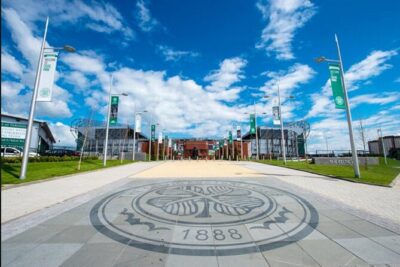 ★ 5.0Guided Celtic Park Stadium TourFrom $253,136 reviews
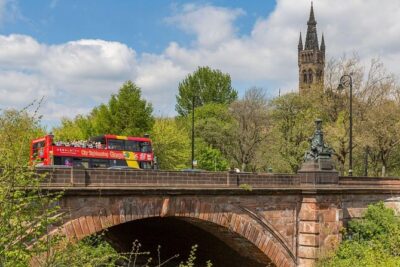 ★ 4.5City Sightseeing Glasgow Hop-On Hop-Off Bus TourFrom $271,873 reviews
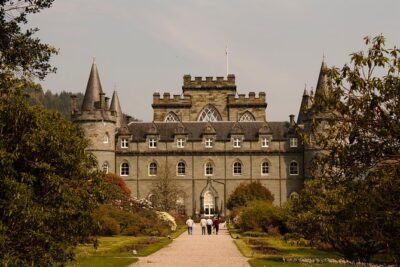 ★ 5.0Oban, Glencoe, Highlands Lochs & Castles Small Group Day Tour from GlasgowFrom $501,432 reviews
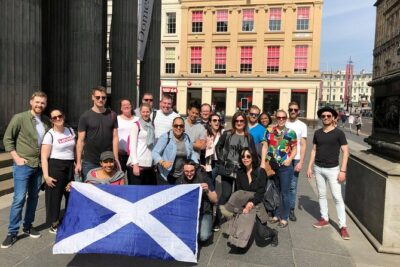 ★ 5.0Glasgow City Centre Walking Tour with Local GuideFrom $161,326 reviews
 ★ 5.0Loch Ness & the Highlands Day Tour from Glasgow Including CruiseFrom $831,211 reviews
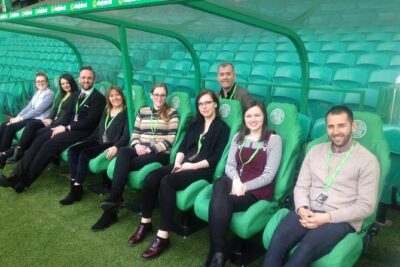 ★ 5.0Celtic Park Tour & Dine PackageFrom $60998 reviews
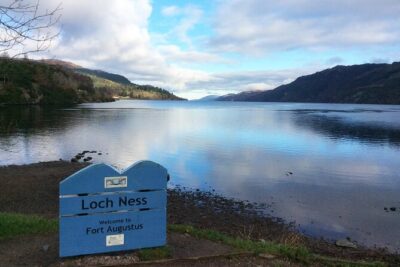 ★ 4.5Loch Ness, Glencoe, and the Highlands Day TourFrom $76806 reviews
 ★ 4.5Glasgow Afternoon Tea ExperienceFrom $61735 reviews
Browse the lists this tour appears in