
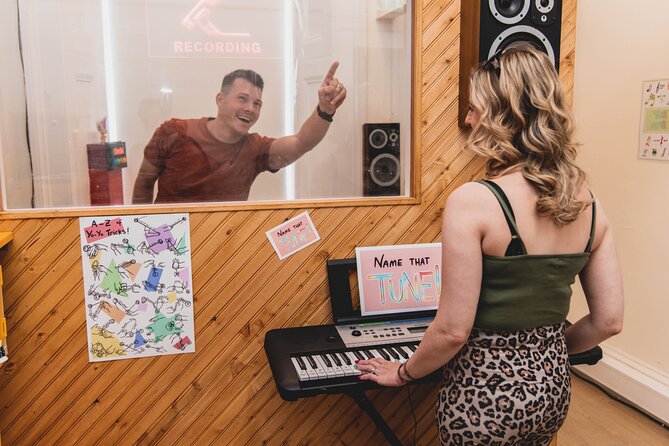
REVIEW · SCOTLAND
Stuck in the 90s A Nostalgic Music Experience
A 90s music murder mystery in Glasgow.
You step into a studio frozen in time, then race against the clock to find out what really happened to Blade Heart, the vanished lead singer of Hearts Desire. It is a private, English-language escape room experience with a story that treats the music era like a crime scene, not just a theme.
I love two things most. First, the details feel genuinely 90s, right down to the playful props and music references that make the room fun even when you are not solving. Second, the puzzles come in different shapes, which is great when you have a group with mixed experience levels. Game masters like Aimee, Eliska, Amy, Joe, and Edi also do a solid job keeping you moving, with hints when you need them.
One thing to consider: the intro video is part of the experience, and at least one player noted that the strong accent made the words hard to catch. If you know accents are a challenge for you, plan to focus on the visuals, and be ready to ask for help early.
In This Review
- Stuck in the 90s, in a Nutshell
- Where You Start in Glasgow (and How It Flows)
- The Story Hook: Blade Heart, the Label Fallout, and a Fast Case
- Inside the 90s Music Studio Set: Props, Sound, and That Time-Travel Feeling
- How the Puzzles Work (and Why You Can Use Teamwork)
- Hints, Hosts, and the Real-Life Difference Between a Good and Great Game
- Price and Value: Is $38.48 Worth It?
- Who This Is Best For (and Who Might Skip It)
- Practical Tips to Enjoy It More (Without Guessing)
- Should You Book Stuck in the 90s in Glasgow?
- FAQ
- How long is Stuck in the 90s?
- Where does the tour start?
- Is it private, or do I join other groups?
- What language is the experience in?
- How much does it cost per person?
- Do I get a mobile ticket?
- How far in advance should I book?
- Can I cancel for a refund?
- Are service animals allowed?
- Is it suitable for most people?
Stuck in the 90s, in a Nutshell

- Retro crime scene setup: A 1990s music studio that frames every clue as part of the case
- Music-forward puzzle design: You get plenty of music and media references mixed into tasks
- Works for groups of different sizes: People describe success with pairs, families, and bigger groups
- Host-led pacing: Your guide keeps you on track, with hints instead of full hand-holding
- Good “medium difficulty” feel: Challenging enough to think, not so hard that everyone checks out
- Fun and funny tone: The humor and props keep it from feeling like a stressful test
Where You Start in Glasgow (and How It Flows)
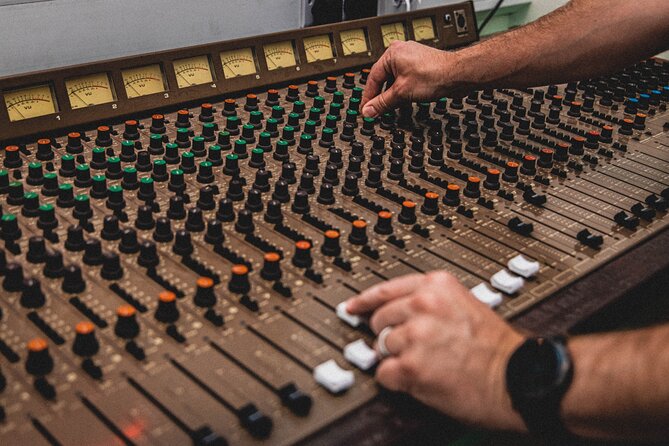
Your experience begins at 24 Sandyford Pl, Glasgow G3 7DS, UK, and it ends back at the same meeting point. That simple point-to-point setup matters. You are not dragged across town before you even start thinking, and you do not waste time figuring out where you are supposed to be once the hour gets close.
The total time is about 1 hour 15 minutes. That is a sweet spot for escape rooms because it gives room for multiple clue steps, without turning the game into a long slog. Also, the whole thing is private, meaning only your group participates. If you are traveling with family, friends, or a work group, that privacy usually makes the room feel more comfortable and easier to coordinate.
Because it is near public transportation, I would plan to build in a few minutes buffer to find the exact entrance and get settled. Then you can start solving right away, instead of doing a pre-game dash.
The Story Hook: Blade Heart, the Label Fallout, and a Fast Case
This is not just a room full of puzzles. The plot is the thread that ties them together.
Blade Heart is found dead in his studio. He used to be the lead singer of the boyband Hearts Desire, one of the big 90s acts. After the band broke up, Blade kept chasing a comeback dream, and his studio supposedly shows the damage, with outdated belongings from the decade that made him famous.
Here is why you matter: Sleazegenix Music Productions drops Blade from their label, then things explode into a public fallout. They still keep rights to his music in case of death. Meanwhile, the owner Daemon Powell is worried he is the prime suspect. You are part of a private detective agency hired to figure out what happened, and you need to determine the truth before Blade’s death is revealed to police.
The story also gives you a built-in list of possible troublemakers. Enemies include:
- Steel, an ex boyband mate
- Big EZ, a rapper
- VanDer Bass, an Ibiza DJ
That enemy list helps for the gameplay feel. You are not guessing randomly. You can treat each clue like a lead connected to someone with motive.
Not settled yet? This is how the other Glasgow bookings measured up.
- Guided Celtic Park Stadium Tour
★ 5.0 · 3,136 reviews - City Sightseeing Glasgow Hop-On Hop-Off Bus Tour
★ 4.5 · 1,873 reviews - Oban, Glencoe, Highlands Lochs & Castles Small Group Day Tour from Glasgow
★ 5.0 · 1,432 reviews - Glasgow City Centre Walking Tour with Local Guide
★ 5.0 · 1,326 reviews
Inside the 90s Music Studio Set: Props, Sound, and That Time-Travel Feeling
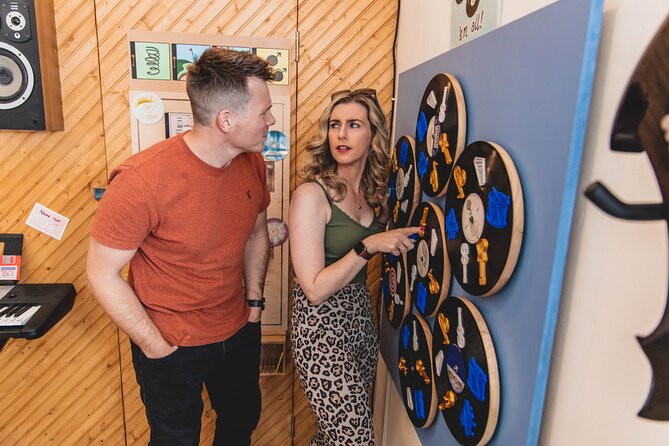
When the door closes, the room leans hard into the decade. Players talk about the nostalgia factor being a huge part of the fun, and the set dressing is where that nostalgia shows up.
A few specific elements mentioned include:
- trolls
- POGs
- tamagotchi
- music playing tied to the theme
- other mechanical or hands-on elements that keep you active
I like this approach because it does two jobs at once. It builds atmosphere fast, and it also gives you more puzzle pathways. If a clue is tied to a prop or a sound detail, you are not just scanning paper. You are looking, listening, and interacting, which tends to work well for groups with different strengths.
You also get a murder mystery vibe, not just generic “find the key” mechanics. The studio setting makes the case feel grounded in a place, and that makes the puzzle hunt feel purposeful.
How the Puzzles Work (and Why You Can Use Teamwork)
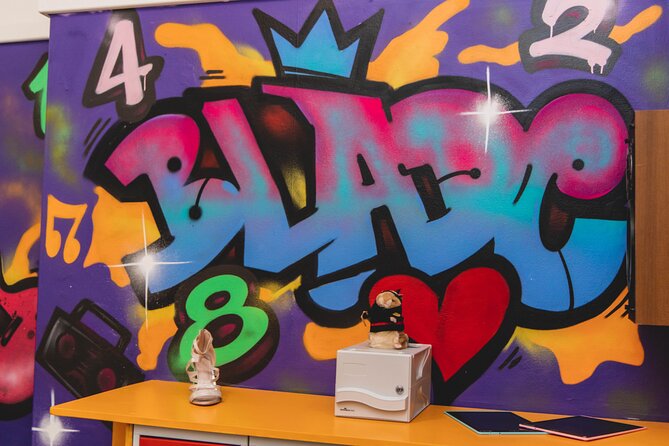
You should expect a steady flow of clue-finding and task-solving. The room is built so that you are doing more than one type of challenge, which is why players describe the puzzles as varied.
A big practical win: the puzzle set is designed to support teamwork. One family described being able to divide and conquer without constantly tripping over each other. That is important in a lot of escape rooms. If everyone has to stand in the same spot and look at the same tablet, groups lose energy. Here, the layout and tasks seem to encourage splitting up.
Difficulty is also described as a good fit for mixed ages. A group with a 15-year-old felt it was the right level to stay enjoyable for everyone. Another set of adults described it as “medium difficulty,” with two people escaping and still feeling like the room was smart, not luck-based.
You can also expect music and retro references woven into the clues. Even if you are not a die-hard music nerd, the room uses that 90s context as a guide, not as a test. One person noted that there is music content that feels authentic, even if some workarounds exist. In practice, that means you can still have fun even if you do not know everything.
Hints, Hosts, and the Real-Life Difference Between a Good and Great Game
Even the best escape room can stall if nobody guides you. Here, the guide role shows up as a major reason people rate the experience so highly.
You may get hosted by different guides depending on your session, but players specifically call out:
- Aimee for welcoming and keeping the group on track
- Eliska for kindness and help that still keeps you playing
- Amy for a great experience and hosting that clarified without taking over
- Joe and Joseph for keeping the vibe moving and explaining things
- Edi for being especially accommodating, including helping close out when you were close
What I take from that is simple. You are not thrown into darkness with a locked box and a shrug. If you miss something obvious, your game master will give hints. And if you are close, they may help you finish.
That makes it a better value for real travel planning. You do not want to spend $38.48 per person on something that turns into frustration. In this room, the pacing sounds designed to bring you to a finish line.
Price and Value: Is $38.48 Worth It?
At $38.48 per person, you are paying for about 75 minutes of structured entertainment inside a themed studio mystery. The value improves if you consider what is included and what you avoid.
What you get:
- a trained guide
- all fees and taxes
- a mobile ticket
- group discounts
- a private setup where only your group participates
The “private” part matters more than it sounds. For a date, a family group, or a work night out, private time usually makes everything feel smoother. You also tend to get better teamwork because you are not sharing the room with strangers.
One more planning note: this experience is often booked about 22 days in advance on average. That suggests it is popular enough that you should not assume you can book last minute and get your preferred time slot.
If you want to maximize value, I would aim for a group size where people can split tasks. Escape rooms usually feel best when at least a couple of players can work different clue areas at the same time.






Who This Is Best For (and Who Might Skip It)
This room seems built for a wide range of people, as long as you enjoy themed puzzles.
Best fit:
- 90s music fans who want nostalgia you can touch, not just look at
- families with teens and adults, since the difficulty feels accessible
- date night couples, because one pair described not stopping for a full hour
- first-time escape roomers, because people report a strong first experience
- work groups looking for a shared activity that still feels fun and not too corporate
If you might skip it:
- If accents and spoken instructions are a problem for you, the intro video may be a sticking point. One player specifically asked for better captions because understanding the strong accent was difficult.
- If you hate music-themed clues or you prefer purely mechanical puzzles with zero retro context, the story style might feel like extra.
Practical Tips to Enjoy It More (Without Guessing)
You will do better if you treat it like a case, not a scavenger hunt.
Here are my practical tips based on how the room is described:
- Pay attention to the opening video, because it sets the tone for the case. If you cannot catch every word, focus on the visuals and be ready to ask for clarification.
- Split tasks early. People describe success when they divide and conquer quickly, rather than everyone wandering the room together.
- Listen for hints, then act. A good game master support seems designed to get you unstuck without killing the challenge.
- Use the room’s props as clue containers. When you see retro items like tamagotchi or POGs, treat them like puzzle components, not decor.
- Keep an eye on timing. The story pushes you to act quickly before the truth is revealed to police, so plan to avoid long dead ends.
If you want the best odds of escaping, it is usually not about being the smartest. It is about staying active, communicating, and using hints at the right moments.
Should You Book Stuck in the 90s in Glasgow?
I would book this if you want a 90s-themed escape room with a murder mystery storyline, strong set dressing, and puzzles that support teamwork. The big standout is the combination of nostalgic props and varied challenges, plus a guide team that clearly knows how to keep groups moving. If you are planning a date, a family visit, or a fun group activity near central Glasgow, this checks a lot of boxes.
I would hesitate only if spoken instructions are hard for you, because the intro video may be tough to understand without captions. Also, if you dislike music references or you prefer escape rooms that focus purely on one puzzle style, the overall vibe might not match your taste.
If your group likes 90s culture and you want to solve a case in about an hour and a quarter, this is a very sensible play.
FAQ
How long is Stuck in the 90s?
The experience lasts about 1 hour 15 minutes (approx.).
Where does the tour start?
You start at 24 Sandyford Pl, Glasgow G3 7DS, UK.
Is it private, or do I join other groups?
It is a private tour/activity. Only your group participates.
What language is the experience in?
It is offered in English.
How much does it cost per person?
The price is $38.48 per person.
Do I get a mobile ticket?
Yes, it includes a mobile ticket.
How far in advance should I book?
This experience is booked on average 22 days in advance, so booking ahead is a good idea.
Can I cancel for a refund?
Yes. Free cancellation is available if you cancel up to 24 hours in advance for a full refund.
Are service animals allowed?
Yes, service animals are allowed.
Is it suitable for most people?
The information says most travelers can participate.
The Rest of What We Wrote Up




Newest write-ups around Glasgow
- The Scottish Highlands Photography Tour & Workshop★ 5.0 · 3 reviews
- Scottish Highland Day Tour from Glasgow★ 5.0 · 3 reviews
- Whisky Adventure – Private Day Tour from Glasgow★ 5.0 · 3 reviews
- 3 Day Isle of Skye Eilean Donan Castle and Loch Ness Tour★ 5.0 · 3 reviews
- Pints & Past: Glasgow Pub Tour Private Tour★ 5.0 · 3 reviews