
REVIEW · INVERNESS & THE GREAT GLEN
Inverness and Outlander Private Self-Guided Walking Tour
Outlander fans get street-level history in Inverness. This private self-guided walk strings together real landmarks and Outlander story threads across about two hours. I like that it moves at your pace, and you are not stuck waiting for anyone. The one thing to consider is that it mixes Inverness general history with Outlander moments, so if you want nonstop show-and-book scenes, this may feel lighter.
My favorite part is the human audio guide. Alex talks you through the route with an audio experience inside the app, and it is not computer-generated voice. You also get GPS, maps, and turn-by-turn style directions, which makes it easy to keep moving even if you are seeing Inverness for the first time.
One more practical drawback: self-guided means you do not have an in-person person to ask questions. If you like deep rabbit holes or tailored explanations, you might want to pair this with a real guide later in your trip.
In This Review
- Key things to know before you set off on Market Brae
- Inverness on foot, with Outlander moments built in
- Market Brae to VisitScotland: starting with a WWII Inverness scene
- Town House of Inverness: Queen Victoria’s family stamp on the marketplace
- Inverness Castle and Malcolm III: the past that keeps returning
- The Three Virtues, Eden Court Theatre, and St Andrew’s Cathedral
- Kilt windows and Victorian Gothic: Highland House of Fraser and St Mary’s Church
- River Ness at Greig Street Bridge: spring water, glens, and weather logic
- Old High St Stephen’s Church and the Irish tradition link
- Leakey’s Bookshop: prints, maps, and a possible signed Outlander find
- North Church Place: where Claire the healer could have fit
- Abertarff House and the Victorian Market: merchant life to covered town life
- Falcon Square and the Eastgate Shopping Centre finish
- Price, pace, and how to get real value
- Should you book this Inverness and Outlander self-guided walking tour?
- FAQ
- How long is the Inverness and Outlander private self-guided walking tour?
- Is there an in-person guide during the walk?
- What language is the tour offered in?
- Where do I start, and where does the tour end?
- Is this tour private or shared with other groups?
- Is this tour refundable if I cancel?
Key things to know before you set off on Market Brae
- It is private, self-guided, and built for your pace, so you can stop for photos without breaking a group rhythm
- Audio by Alex inside the app gives the story beats, with photos and videos along the way
- GPS route plus map and directions helps you find each stop quickly on foot
- Outlander tie-ins are woven in at specific landmarks like Inverness Castle and North Church Place
- Most stops are free to view, including churches, bridges, and town-center buildings
Inverness on foot, with Outlander moments built in
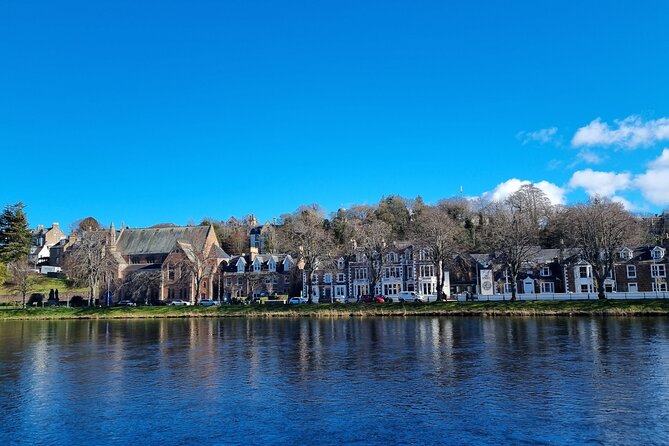
This is a town-walk, not a bus tour. You start and end in the center, with a route that makes sense for a first afternoon in Inverness, especially if you want to keep your plans flexible.
The value here is not just the low price. It is the mix of free landmarks and an app-based guide that stays with you for 3 weeks after purchase. That means if you miss something the first pass, you can return to the same story sections without paying again.
Also, the “private” part matters more than it sounds. You are only sharing the experience with your own group, so you can walk quietly, linger, or move briskly depending on weather and energy.
Market Brae to VisitScotland: starting with a WWII Inverness scene
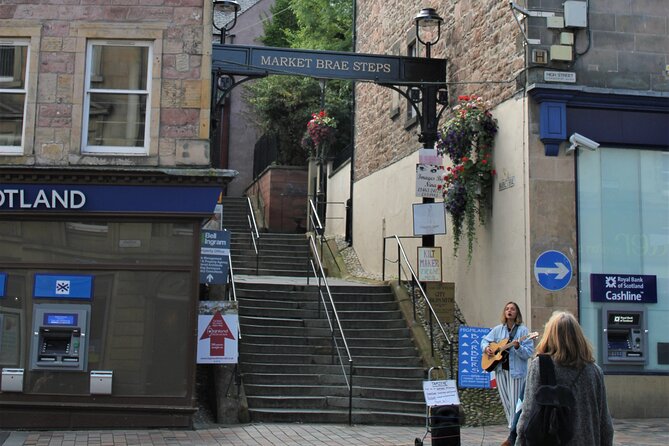
Your walk begins at the bottom of the Market Brae Steps, right in central Inverness. This is a good starting point because you are already in the busy core, close to transit and easy to reach on foot from many town-center stays.
The first story beat leans into the Outlander connection using a 1945 frame. You stand near the location of tourist information in the middle of the city, and the audio places Frank and Claire in Inverness as they reunite after wartime service. It is a clever way to start, because it turns a simple “find the building” moment into a time jump.
Practical note: depending on the season, this area can be more or less crowded. If you want a calmer start for photos, you might aim for earlier in the day than the usual lunchtime bustle.
Leaving from Inverness? Start with these
- Loch Ness Cruise, Outlander & Urquhart Castle Tour from Inverness
★ 5.0 · 1,384 reviews - Isle of Skye and Eilean Donan Castle Day Tour from Inverness
★ 5.0 · 1,236 reviews - Hogwarts Express and the Scenic Highlands Day Tour from Inverness
★ 5.0 · 1,227 reviews - The Ultimate Isle of Skye Day Tour from Inverness
★ 5.0 · 1,135 reviews
Town House of Inverness: Queen Victoria’s family stamp on the marketplace
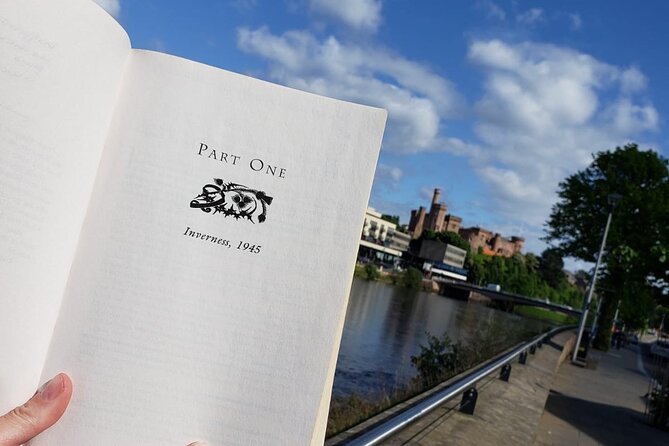
Next you face the Town House of Inverness, built in 1878 on the old marketplace and opened in 1882 by Alfred, Queen Victoria’s second son. Even if you do not care about royal timelines, the building gives you a real sense of how formal civic power looked in Victorian-era Scotland.
For Outlander fans, this stop works because it gives you the “period feeling” that makes the story moments land better. The walk is not just about where characters might have stood, it is also about understanding the town’s physical shape.
Tip for your first visit: take a minute here to orient yourself visually. When you know where this civic building sits relative to the next few landmarks, the rest of the route feels easier and more connected.
Inverness Castle and Malcolm III: the past that keeps returning
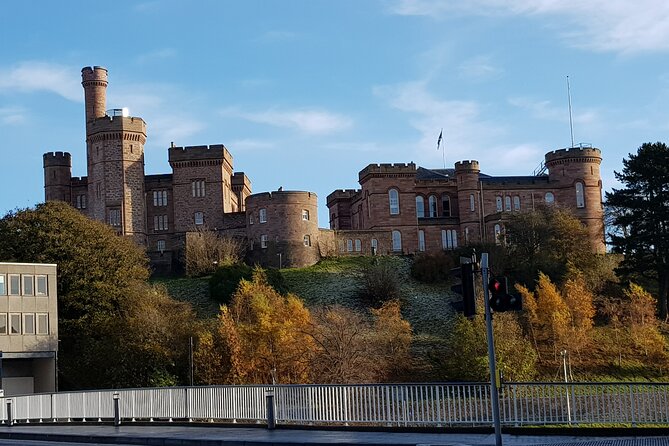
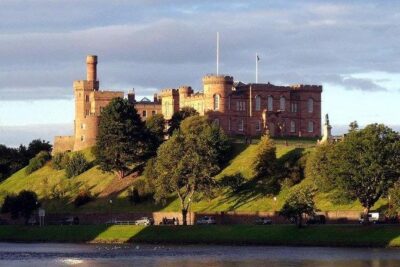
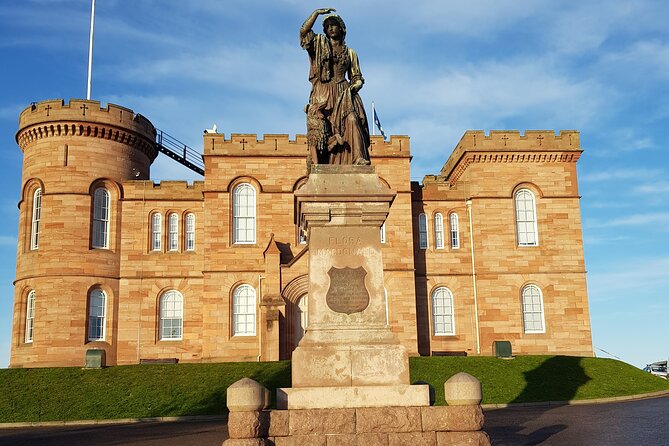
You reach Inverness Castle, tied to legends of Malcolm III. The audio explanation centers on why a castle earlier than the current one was destroyed and how the site’s power role shifted. Then it connects that setting to Outlander in the novels and TV series, so you get both place history and story meaning.
This is one of those stops where the value is in the “why this place matters” framing. You are not only looking at a dramatic local landmark, you are learning how Inverness itself became a stage for centuries of identity and conflict.
If the weather is windy, dress for it. Castle viewpoints in the center can still feel exposed, and you will want your hands free for photos.
The Three Virtues, Eden Court Theatre, and St Andrew’s Cathedral
From the castle area, you move toward a set of landmarks that broaden the story from Outlander into “how Inverness holds its culture.”
First, you see the statue of the Three Virtues, with Faith, Hope, and Charity linked to the apostle Paul’s first letter to the Corinthians. It is not a direct Outlander reference, but it adds a layer of religious and moral symbolism that fits the tone of many Scottish towns.
Then Eden Court Theatre appears, a modern venue that started life on 15 April 1976. This is a useful contrast stop. You can stand in the same city that hosts film, theatre, and arts today and remember that Inverness also has deep roots stretching back well before modern entertainment.
Finally comes St Andrew’s Cathedral, also called Inverness Cathedral, dedicated to St Andrew. The foundation stone was laid on 17 October 1866, by the Archbishop of Canterbury after Bishop Eden proposed a cathedral in 1853. It also matters that this is only the second one built after the Reformation.
Why I like this trio for a self-guided route: it keeps you moving through different “layers” of Inverness. It is not a single theme all the way through, so the walk stays interesting even if you are not staring at Outlander every minute.
Kilt windows and Victorian Gothic: Highland House of Fraser and St Mary’s Church
At Highland House of Fraser, the connection is not a character scene. It is the visual punch of traditional highland dress, with the kilt displayed in the window. For anyone who wants their Outlander-inspired day to feel like it belongs in the Highlands, this stop acts like a photo moment and a cultural cue.
Next is St Mary’s Roman Catholic Church, designed by William Robertson and opened on 2 April 1837. The audio highlights its Victorian Gothic Revival style, and it points out the priest’s residence, the presbytery, and a convent nearby.
This is another stop where you get value from the architecture notes. Gothic Revival details can look similar from a distance, but being told what to look for helps you “see” instead of just walk past.
If you are sensitive to church privacy or active services, keep your pace respectful. The tour is built for viewing, not lingering inside.
Other Outlander routes, if you want more set locations

River Ness at Greig Street Bridge: spring water, glens, and weather logic
You cross at Greig Street Bridge, the second pedestrian bridge in Inverness. The audio explains how spring can raise the River Ness water level due to rain and melting snow flowing into the glen, which is a Scottish term for a valley.
I like this stop because it ties geography to real weather behavior. It helps you understand why Inverness feels shaped by water, not just decorated by it.
Photo tip: bridges are also about reflections. If the light is kind and the surface calm, you can get a stronger shot here. If it is grey and rainy, do not fight it. Just enjoy the story beat and keep moving.
Old High St Stephen’s Church and the Irish tradition link
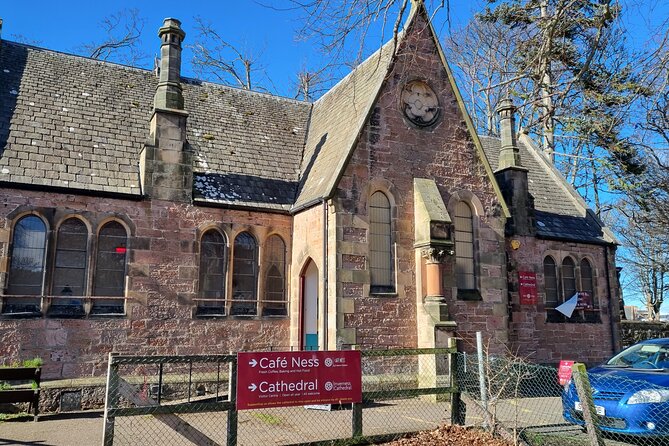
Old High St Stephen’s Church is next, and the key detail is that the tower dates back to the fourteenth century. Even if the rest of the building looks different than you expect, that old tower anchors the whole stop in deep time.
The route also mentions St Michael’s Mount, the small hill you are standing on, and connects it to Irish tradition. This is exactly the kind of “small place story” that makes a self-guided walk worth your attention.
If you like history but hate long museum breaks, this kind of outdoor heritage stop is a sweet spot. It gives you an old-world anchor without forcing a long indoor commitment.
Leakey’s Bookshop: prints, maps, and a possible signed Outlander find
Leakey’s Bookshop is a fun turn in the route. The shop has a story of its own, since Charles Leakey converted an old church into a second-hand bookstore. Inside, you might find rare and old prints, classic volumes, and older maps.
The Outlander angle is subtle but real: you might even spot a signed edition of an Outlander novel. I would treat that as a bonus, not a promise, but the chance is part of why this is worth slowing down for.
If you like browsing, give yourself a bit of time here even if your legs feel good. A bookstore stop in the middle of a walking tour turns the day into something calmer and more personal.
North Church Place: where Claire the healer could have fit
North Church Place delivers one of the strongest Outlander story connections on the walk. In the story, Claire is a World War II combat nurse and healer, and Jamie’s first deep connection comes when Claire sets his shoulder early on in the book and the TV series.
The audio then puts you in an eighteenth-century Inverness framing. If Claire had lived there, the building opposite North Church Place is described as a likely place for her healing work.
I like this because it makes Outlander feel practical. You are not just “spotting references,” you are trying to imagine how the town could have worked for someone in her role.
Take a quick look around at the street layout. Even without going inside, seeing the building positions helps you understand the logic of the story scene.
Abertarff House and the Victorian Market: merchant life to covered town life
Abertarff House comes next, described as the oldest non-secular building in Inverness. It is a 2.5-story merchant house built for the Fraser of Lovat family in 1593, and it has served different purposes since then.
This is the point where the walk becomes a lesson in continuity. Inverness keeps reusing and repurposing buildings, which is common in older European cities and helps explain why modern streets still feel historical.
Then you step into the Victorian Market. This stop may not be the most Outlander-specific, but it is hard to skip if you love old cities with working-market energy. The audio framing connects it to Inverness growing into a larger Royal Burgh and needing a covered market in the nineteenth century.
Even if you only glance through, you get a clear sense of how locals shop and socialize when the weather is unpredictable. In Scotland, that covered element is not just pretty, it is practical.
Falcon Square and the Eastgate Shopping Centre finish
Falcon Square ends the route, dedicated to John Falconer, who founded Falcon Foundry in 1858. Around the unicorn statue, you can spot falcons flying as part of the design.
From here you are also near Eastgate Shopping Centre, opened in 1983 and extended in 2003, with over 60 stores inside. It is a fitting closer because you started in a town center walk, and you finish at a modern retail hub without losing the sense of Inverness history under your feet.
If you want to extend the day, this is a good place to do it. You are already set down near food options and shops, and you can decide whether to explore more on foot or call it an early win.
Price, pace, and how to get real value
At $12.22 per person, the price is low enough that you can justify it even if you end up using the tour as a flexible intro. For the money, you get 2 hours worth of guided storytelling, plus 3 weeks of app access in case you want to revisit stops.
Here is where the value gets practical: the tour is designed around GPS route guidance and a map-style experience. That reduces the mental load. You spend more time looking at buildings and less time checking your phone every ten steps.
Pace wise, the route includes multiple short stops, each about 5 to 10 minutes, plus walking between them. You are not locked into a museum rhythm. This is ideal for people who like walking, want structure without rigidity, and do not mind reading the details at street level.
A smart way to use it: start strong, then loosen your grip. Do the story segments in order, but give yourself time for two “no audio” breaks, one for photos and one for a drink. You will remember more of the day, and you will not feel like you are sprinting from one fact to the next.
Should you book this Inverness and Outlander self-guided walking tour?
Book it if you want a first-day Inverness walk that adds story meaning without forcing a formal group tour. It is also a good match if you like the Outlander world but do not need constant character dialogue, because the walk also teaches you the real Inverness setting.
I would skip or reconsider if you are chasing a heavy, strictly Outlander-focused experience. This tour ties the series to specific places, but it also spends time on general Inverness history and architecture, which may not satisfy a super fan who expects every stop to be a plot scene.
Best fit: couples, solo walkers, or small groups who like independence, good storytelling, and easy access to town-center sights.
FAQ
How long is the Inverness and Outlander private self-guided walking tour?
It is about 2 hours long.
Is there an in-person guide during the walk?
No. The experience is self-guided, and there is no in-person guide included.
What language is the tour offered in?
The tour is offered in English.
Where do I start, and where does the tour end?
You start at Market Brae, Inverness IV2 3AB, UK, and the tour ends back at the same meeting point.
Is this tour private or shared with other groups?
This is private, so only your group participates.
Is this tour refundable if I cancel?
No. It is non-refundable and cannot be changed, and the amount paid will not be refunded if you cancel or request an amendment.
The Rest of What We Wrote Up

More Outlander Ground

Starting from Inverness
Newest write-ups around Inverness
- Wild West Coast Adventure (Part 1)★ 5.0 · 3 reviews
- Private Isle of Skye Tour★ 5.0 · 3 reviews
- Luxury Transfer Service | Inverness to Edinburgh★ 5.0 · 3 reviews
- Culloden Battlefield, Clava Cairns and Loch Ness, Urquhart Castle★ 5.0 · 4 reviews
- Inverness and Outlander Private Self-Guided Walking Tour★ 5.0 · 4 reviews
Inverness & the Great Glen, compared.
 ★ 5.0The Isle of Skye and Eilean Donan CastleFrom $582,039 reviews
 ★ 5.0Loch Ness Cruise, Outlander & Urquhart Castle Tour from Inverness1,384 reviews
 ★ 5.03-Day Isle of Skye Inverness Highlands and Glenfinnan Viaduct Tour from EdinburghFrom $2241,351 reviews
 ★ 5.0Isle of Skye and Eilean Donan Castle Day Tour from InvernessFrom $941,236 reviews
 ★ 5.0Hogwarts Express and the Scenic Highlands Day Tour from InvernessFrom $2621,227 reviews
 ★ 5.0The Ultimate Isle of Skye Day Tour from InvernessFrom $1511,135 reviews
 ★ 5.0Isle of Skye Full Day Private Tour from InvernessFrom $1,0401,065 reviews
 ★ 5.0Loch Ness & Culloden Battlefield Private Tour from InvernessFrom $1,040932 reviews
Browse the lists this tour appears in