
REVIEW · GLASGOW TOURS & DAY TRIPS
Fun and Flexible Treasure Hunt Around Glasgow with Cryptic Clues
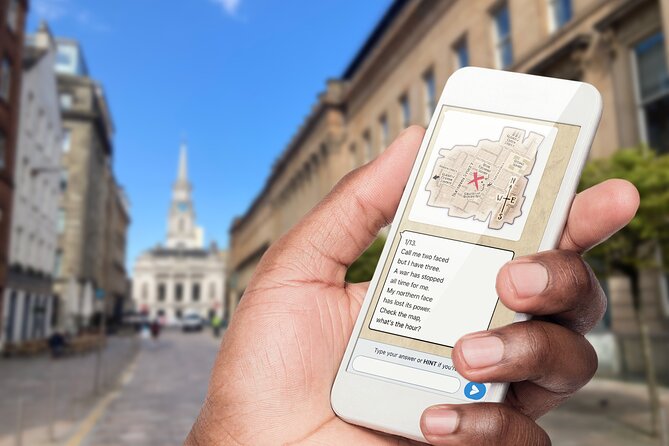
Glasgow turns into a game in three hours. This self-led Glasgow treasure hunt uses phone-based maps and Captain Bess to send you cryptic clue challenges, plus short stories at every stop. I love how you can move at your pace, and I also like that you get a real-feeling city overview without sitting through a fixed lecture. The main catch is practical, you need a smartphone with mobile data, and some of the clues can feel cryptic enough that you will likely use hints.
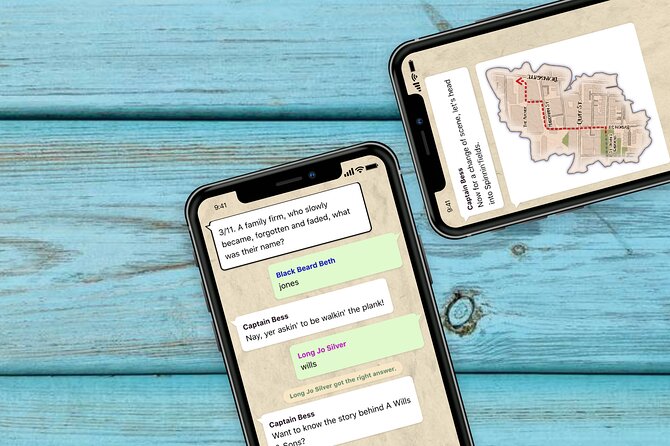
The format is simple and low-fuss. You get a shareable game link for your group, you use a mobile ticket, and you do not need to download anything or print anything. It works like WhatsApp, so hints and clue updates feel familiar, and you can start when you want instead of waiting on a tour time.
For a lot of people, the payoff is in the variety of streets and buildings. You will bounce between big landmarks and quieter corners, and you can even slow down for window-shopping moments that the game notices. One thing to consider up front: the route is designed for moderate physical fitness, so plan for walking and take your time on hilly stretches and busy crossings.
In This Review
- Key highlights I’d plan around
- Getting the phone game ready at Accounts29, Royal Exchange Square
- George Square to Duke of Wellington: your first clue clicks with instant context
- River Clyde and Buchanan Street: switching from monuments to motion
- Glasgow Green and City Chambers: history as short story beats
- The Clutha Bar and Merchant Square: where a pub crawl idea fits naturally
- Argyll Arcade, Tolbooth Steeple, and Mercat Cross: shopfront clues and street-level details
- Pacing, clue difficulty, and the small gotchas that matter
- Price and value for a Glasgow treasure hunt on your phone
- Who should book this treasure hunt, and who might want a different plan
- Should you book? My practical call
- FAQ
- How long is the Treasure Hunt Glasgow experience?
- What does it cost per person?
- Where do we start, and where does it end?
- Do I need to download an app or print anything?
- Do I need mobile data on my phone?
- Can we start the hunt when we want?
- Is it available in English, and is it private?
- What if we cannot find the answer to a clue?
- Is the route physically demanding, and are service animals allowed?
Key highlights I’d plan around

- Phone-guided treasure maps and clue hunts you can solve in your own rhythm
- Captain Bess hints so you are not stuck for long
- 11 standout stops that give you a broad Glasgow sweep
- A flexible format you can stretch into a longer wander if you like
- Great for groups and team building because you can play as one unit
- History-style stories that make the landmarks click, not just look pretty
Getting the phone game ready at Accounts29, Royal Exchange Square
You start at Accounts29, Royal Exchange Square, Glasgow G1 3AJ. This is a handy central spot, and it sets the tone: you are not meeting a guide in a single location to be herded around, you are logging into a game that runs on your phone.
Because the experience is private, it stays focused on your group only. If you are doing this with friends, it is easy to fall into teams naturally and pass phones around. If you are doing it with a bigger group, the setup can split people into teams, with captains using QR-style access so each group can start the hunt cleanly.
The game is designed to feel like a chat. Captain Bess sends you the next step, then follows up with the maps and clues you need to search the city for answers. If you hit a wall, you can ask for hints rather than spinning in place for 20 minutes.
Practical note: a smartphone with mobile data connection is not included, so plan ahead. Offline mode is not mentioned, so assume you will need a working connection for the maps, clue messages, and whatever link-based access you get on your ticket.
George Square to Duke of Wellington: your first clue clicks with instant context
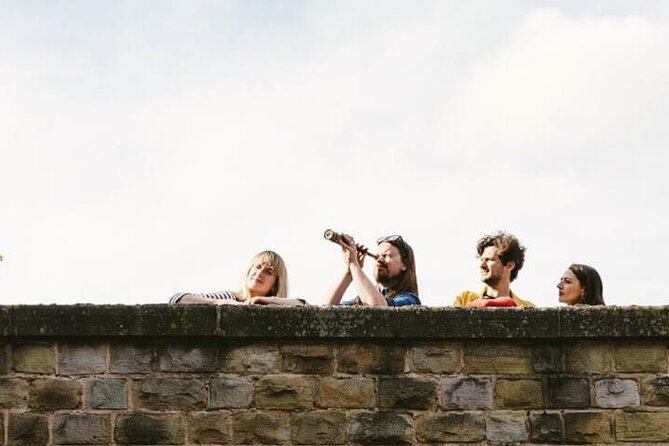
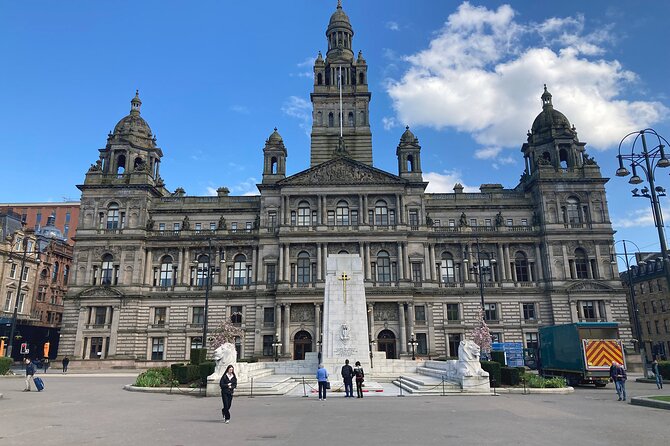
Stop 1: George Square
Stop 2: Duke of Wellington Statue
George Square is a strong opener because it is easy to see, easy to orient yourself, and packed with visual details the clues can lean on. This is where you get your first set of cryptic prompts and begin learning how the hunt thinks. You are not just walking to a photo spot, you are looking for subtle cues, wording, and what a clue is trying to steer your eyes toward.
One real-world consideration: George Square can be affected by improvement works. That matters because if a clue expects something visible in a specific area, construction can block views or change how readable things are. The good news is that the hunt has been rerouted around George Square during ongoing works, so you should not feel like the game is broken if you arrive and the area looks different.
Next you hit the Duke of Wellington Statue. This stop helps the hunt shift from open square space into more “look closely” problem solving. Statues and monuments are ideal for this style of treasure hunt because a clue can point to shape, setting, inscription details, or the statue’s relationship to what surrounds it.
If you are playing with teenagers or mixed ages, this early stretch is a good test drive. The game is playful, but it still teaches you how to decode the clues, so later stops feel easier once you understand the pattern.
What else runs out of Glasgow
- Guided Celtic Park Stadium Tour
★ 5.0 · 3,136 reviews - City Sightseeing Glasgow Hop-On Hop-Off Bus Tour
★ 4.5 · 1,873 reviews - Oban, Glencoe, Highlands Lochs & Castles Small Group Day Tour from Glasgow
★ 5.0 · 1,432 reviews - Glasgow City Centre Walking Tour with Local Guide
★ 5.0 · 1,326 reviews
River Clyde and Buchanan Street: switching from monuments to motion
Stop 3: River Clyde
Stop 4: Buchanan Street
Stop 3 takes you toward the River Clyde. This is a good change of pace. After the square and statue, the waterfront area gives you a wider view to work with, and it is a nice reset if your group is still warming up to the cryptic style. Even when the clues are tricky, being near the river tends to keep energy up because there is a steady “walk and look” rhythm.
Stop 4 is Buchanan Street, a major shopping street where your clues can connect to everyday city life. This is where the treasure hunt starts to feel more like a city game and less like a museum walk. If your group loves people-watching or casual browsing, this is the stretch where you can slow down for shop-window details without derailing the route.
The hunt’s style matters here. You can take things at your own pace. If something catches your eye in a storefront window, you do not have to rush past it because you are already free to pause, read, and compare what you see to what you need for the next clue.
Glasgow Green and City Chambers: history as short story beats
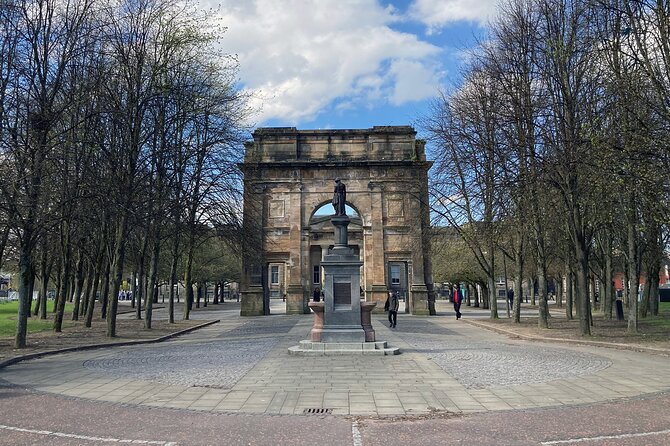
Stop 5: Glasgow Green
Stop 6: City Chambers
Glasgow Green is a smart mid-route choice. Open space can make cryptic puzzles feel less stressful because you have more room to step back, take time, and scan. This stop is also a natural point for a quick group regroup, especially if someone needed a couple hints earlier.
Then you shift to City Chambers. This is where the experience stops being only a treasure hunt and starts giving you a real sense of what makes Glasgow look the way it does. The game includes interesting facts and stories as you go, so you are not just reading the names of buildings. You are getting short context that helps you recognize why a place matters.
If you are the type who usually walks past landmarks without thinking too hard, this is a good moment to pay attention. The City Chambers stop is a “slow down and notice” section, and the clue structure nudges you to look beyond the obvious.
A tip that helped a lot of groups: if your puzzle-solving brains are tired, use hints sooner rather than later. You still get the story value, and you avoid losing the fun to frustration.
The Clutha Bar and Merchant Square: where a pub crawl idea fits naturally

Stop 7: The Clutha Bar
Stop 8: Merchant Square
Stop 7, The Clutha Bar, is a fun choice because it connects Glasgow’s built environment with the city’s social vibe. The hunt is not presented as a nightlife experience, but it gives you the flexibility to treat the route like a “slow day out.” If you want to turn the hunt into a light pub crawl, the structure supports that. You can linger, then move on when your group is ready.
Stop 8 is Merchant Square, another location that feels like a “city in layers” stop. This is where you can end up walking through spaces you might otherwise skip, because the clue hunt guides you into the right corners at the right time. It also gives variety: after a bar-focused stop, you get a more open, pedestrian-friendly feel again.
One practical advantage here is weather resilience. Reviews note the hunt was enjoyable even in rain. Since you are following a phone-driven route and can pause and solve at your own speed, showers tend to feel manageable rather than disruptive.
Argyll Arcade, Tolbooth Steeple, and Mercat Cross: shopfront clues and street-level details
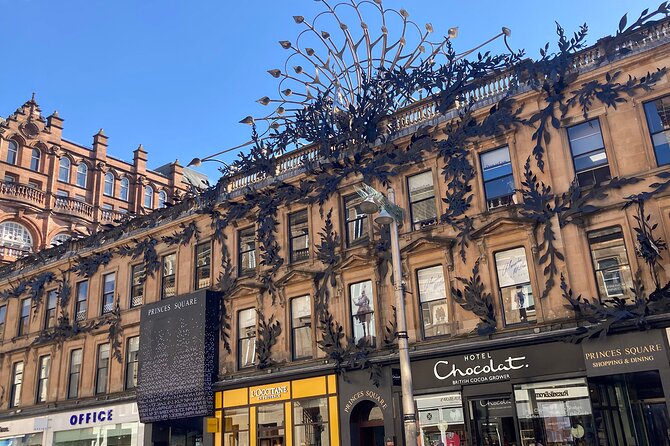
Stop 9: Argyll Arcade
Stop 10: Tolbooth Steeple
Stop 11: Mercat Cross
Argyll Arcade is ideal for a treasure hunt style that rewards close looking. Covered arcades and shopfronts are perfect for cryptic clues because you can spot signage, symbols, and visual references without needing huge dramatic landscapes. This is also a friendly stop for smaller groups that want to split tasks, one person scanning storefronts while another reads the clue prompt.
Tolbooth Steeple adds a vertical-feeling landmark moment. Even without the exact mechanics of each clue, steeples and historic towers usually encourage you to look for specific details, like surrounding features, inscriptions, or how the building sits in its streetscape. It is the kind of stop where your group often feels the “oh, that’s what the clue meant” payoff.
Then comes Mercat Cross. This is a classic city anchor point, and it gives you a satisfying end-stretch where your searching skills are now tuned in. If you have been stuck at earlier cryptic steps, this late-stage stop is often where you find your rhythm again, because by now you understand how Captain Bess frames the clue language.
A fun mid-route tip from a group that played: there can be a doughnut stop about halfway through, and Trantrum Doughnuts was specifically called out. If you see that suggestion pop up in your route, it can be a nice energy reset without breaking the flow of the game.


Pacing, clue difficulty, and the small gotchas that matter
What I like most about this hunt is how it balances entertainment with city learning. The route is varied enough that you do not feel trapped in one theme, and the built-in stories keep it from turning into a pure scavenger chase.
Still, be realistic about the clue style:
- Cryptic clues: Some people find them just challenging enough, others find them a bit too cryptic and lean heavily on hints. That is normal. Use hints early if you want to keep the momentum.
- Walking time adds up: It is about 3 hours (approx.). For some teams, that felt right. For larger teams, a few people felt it stretched too long. If you have a group with shorter attention spans, consider starting with a plan to take breaks.
- Visible details can change: George Square in particular can look different if works are underway, and some clue spots might be harder to read depending on what is happening in public spaces.
On the upside, it is also easy to adapt. You can treat it like a flexible afternoon, pausing for what interests you, then catching up when everyone is ready.
Price and value for a Glasgow treasure hunt on your phone
At $20.58 per person for roughly 3 hours, this is priced like a low-cost, high-fun activity. The value comes from what you get for that price, the game engine that sends maps and clues, the hint system, and the on-the-fly stories you receive while walking.
You are also buying flexibility. Because you can start when you want and you do not need to coordinate everyone around a fixed schedule, you do not waste a chunk of your day waiting for the “official” start. That matters in Glasgow, where weather can change and sidewalks can look different block to block.
It is also good value for groups. One of the best-reviewed angles is team building. With a shared puzzle structure, people talk, compare ideas, and move together rather than splitting into separate tourist silos.
If you are traveling solo, it can still work, but the social energy tends to be best when you have at least a small group to trade phone-screen insights and clue interpretations.
Who should book this treasure hunt, and who might want a different plan
This is a great fit if you want:
- A first-time orientation to Glasgow that feels like play, not homework
- A group activity that keeps everyone engaged
- A flexible plan that works around your pace and spontaneous stops
- A way to mix landmarks with street-level details
It might be less ideal if:
- Your group hates puzzles and wants straightforward sightseeing
- You do not want to rely on a smartphone and mobile data connection
- You expect an easy, zero-thinking stroll
Should you book? My practical call
Book it if you want a Glasgow day with built-in momentum. You get a route that covers big-name stops and lesser-noticed areas, plus short city stories that make the places make sense.
Skip it only if cryptic clues sound like a deal-breaker for your group or if you cannot reliably use mobile data. If that is your situation, you would spend too much time stuck instead of enjoying the walk.
If you do book, here’s the smartest way to enjoy it: plan for hints, wear shoes you can walk in for a few hours, and give yourself permission to pause for storefront moments. This hunt works best when you treat it like a playful way to pay attention to Glasgow.
FAQ
How long is the Treasure Hunt Glasgow experience?
It lasts about 3 hours.
What does it cost per person?
The price is $20.58 per person.
Where do we start, and where does it end?
The start is Accounts29, Royal Exchange Square, Glasgow G1 3AJ. It ends back at the meeting point.
Do I need to download an app or print anything?
No. You don’t need to download anything or print materials. It is mobile-ticket based.
Do I need mobile data on my phone?
Yes. A smartphone with mobile data connection is required, and it is not included.
Can we start the hunt when we want?
Yes. The experience lets you start at your own chosen time.
Is it available in English, and is it private?
It is offered in English, and it is a private tour or activity, so only your group participates.
What if we cannot find the answer to a clue?
You can ask for hints if you get stuck.
Is the route physically demanding, and are service animals allowed?
You should have a moderate physical fitness level, and service animals are allowed.
The Rest of What We Wrote Up




What Else Leaves Glasgow
Newest write-ups around Glasgow
- The Scottish Highlands Photography Tour & Workshop★ 5.0 · 3 reviews
- Scottish Highland Day Tour from Glasgow★ 5.0 · 3 reviews
- Whisky Adventure – Private Day Tour from Glasgow★ 5.0 · 3 reviews
- 3 Day Isle of Skye Eilean Donan Castle and Loch Ness Tour★ 5.0 · 3 reviews
- Pints & Past: Glasgow Pub Tour Private Tour★ 5.0 · 3 reviews
Glasgow Tours & Day Trips, compared.
 ★ 5.0Guided Celtic Park Stadium TourFrom $253,136 reviews
 ★ 4.5City Sightseeing Glasgow Hop-On Hop-Off Bus TourFrom $271,873 reviews
 ★ 5.0Oban, Glencoe, Highlands Lochs & Castles Small Group Day Tour from GlasgowFrom $501,432 reviews
 ★ 5.0Glasgow City Centre Walking Tour with Local GuideFrom $161,326 reviews
 ★ 5.0Loch Ness & the Highlands Day Tour from Glasgow Including CruiseFrom $831,211 reviews
 ★ 5.0Celtic Park Tour & Dine PackageFrom $60998 reviews
 ★ 4.5Loch Ness, Glencoe, and the Highlands Day TourFrom $76806 reviews
 ★ 4.5Glasgow Afternoon Tea ExperienceFrom $61735 reviews
Browse the lists this tour appears in