
REVIEW · ABERDEEN, DUNNOTTAR & THE NORTHEAST COAST
Aberdeen’s Ancient Heritage and Folklore
Pictish Scotland, minus the crowds. This 7.5-hour day trip gives you real Pictish strongholds and stone circles, explained with clear local folklore. I especially like how the route mixes practical archaeology with stories you can actually picture, and how the guide (Jacqueline) adjusts to what you want to see. One thing to consider: you do climb hills and there are steep sections, so it is not ideal for mobility challenges.
The whole point is to trace how the people of the northeast lived, believed, and left marks that still show up today. You spend the day in off-the-beaten-path corners of Aberdeenshire, with site stops where the meaning is in the details, not just in the labels. There is WiFi on board, and you will use a mobile ticket, which makes the start of the day easy.
You meet in Aberdeen at the William Wallace Statue on Union Terrace, then you head out for a small group experience, max 7 travelers, and finish back at the same spot. The big catch for most people: lunch is not included, but you get solid options for your break.
In This Review
- Key highlights you will feel on the day
- Pictish Scotland from Aberdeen: why this day trip feels different
- Barra Hill fort: your first lesson in defended living
- Dunnideer Hillfort and the Stone Circle: concentric defenses in plain sight
- Rhynie and Tap O’Noth: the Pictish stronghold that changed everything
- Bellabeg picnic by the river and the Doune of Invernochty
- Tomnaverie recumbent stone circle: standing where theories matter
- Price, pacing, and what to pack for a 7.5-hour day
- Jacqueline’s guiding style: why personalization matters here
- Who should book this Pictish heritage tour, and who should skip it
- Should you book this tour?
- FAQ
- What is the price per person?
- How long is the tour?
- Where do I meet, and what time does it start?
- Is lunch included?
- Are there admission fees for the stops?
- Is this tour difficult to walk?
- Is it recommended for travelers with mobility issues?
- How many people are in the group?
- What if the weather is bad, or I need to cancel?
Key highlights you will feel on the day
- Small group, max 7 travelers, which makes it easier to ask questions and slow down when something clicks
- Pictish carvings at Rhynie, where symbols are the main event, not a side note
- Recumbent stone circle at Tomnaverie, a north-east Scotland monument type with a distinct look
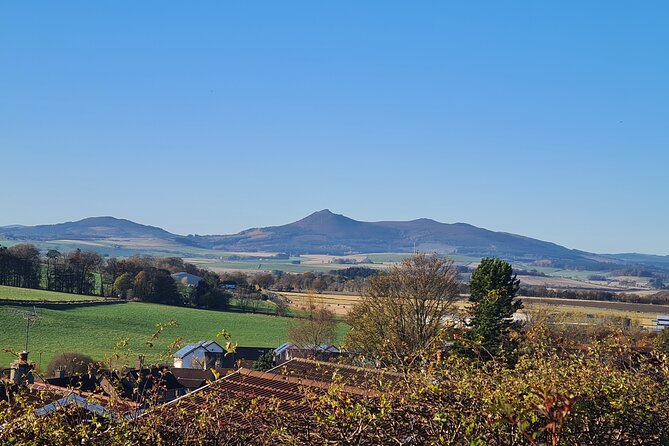
- Tap O’Noth and hillfort rings, including views over huge defended space and what that likely meant
- Jacqueline’s flexible storytelling, including extra nature or heritage moments when the day allows
Pictish Scotland from Aberdeen: why this day trip feels different
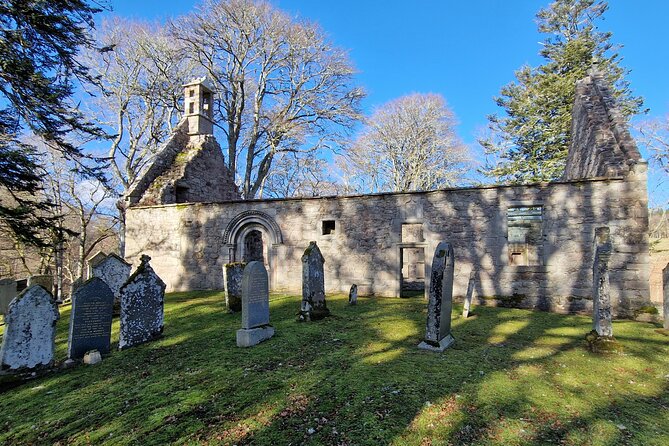
This is not a museum day. You are outside, walking through the same kinds of spaces early communities chose, and listening to how people made sense of power, trade, and survival in the northeast.
I like tours like this because they teach you how to look. A bank and ditch stop being “just earth” and turns into a clue. A stone circle stop being “just rocks” and turns into a question about people, memory, and calendars.
The tour is also built around a specific story arc. You start with hillfort life, move into a major Pictish stronghold, then end with a recumbent stone circle tied to much older burial ground. It is one long conversation from practical life to belief, and back again.
Barra Hill fort: your first lesson in defended living
You begin at Barra Hill fort, a site that represents a pattern you will notice across Aberdeenshire. Hillforts were often placed on higher ground, with enclosures that could have been made of wood and stone, forming places where people lived and worked.
What matters here is how much you can still infer even when much of the original structure is gone. At sites where only foundations remain, archaeology helps fill in the blanks, and the guide can point out what is likely, what is less certain, and how researchers are still learning year by year.
If you like getting your bearings early, this first stop is useful. It sets the “shape” of the day, so when you reach the more dramatic hillfort systems later, you are not learning from scratch.
Granite city days and the cliffs at Dunnottar
- Aberdeen City Centre Walking Tour (2pm)
★ 5.0 · 217 reviews - Dunnottar Castle and Royal Deeside Small-Group Tour from Aberdeen
★ 5.0 · 196 reviews - Loch Ness and the Highlands Small-Group Day Tour from Aberdeen
★ 5.0 · 164 reviews - North East Coastal Trail Small Group Day Tour from Aberdeen
★ 5.0 · 80 reviews
Dunnideer Hillfort and the Stone Circle: concentric defenses in plain sight
Next you take a short walk up a low hill, where the ruins of Dunnideer Castle sit near the Dunnideer Hillfort. The key detail is the timeline layering. The tower house at Dunnideer Castle dates to around 1260, and it was built partly using the remains of an earlier vitrified hill fort on the same ground.
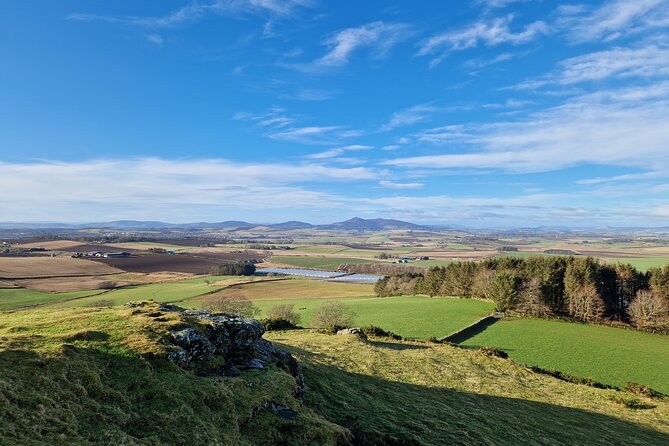
You also get one of the best visual payoffs on the day: at least five concentric rings of defenses. From below and from atop the hill, those defenses show up as high banks and ditches. It is a very hands-on way to understand how a community might have structured protection, movement, and control.
A short distance away you will see the remaining stones of the Dunnideer Stone Circle. This is a good moment to reset your brain. Hillforts tell you about defense and organization, while stone circles bring you back to ritual and shared belief.
Rhynie and Tap O’Noth: the Pictish stronghold that changed everything
Rhynie is where the day gets bigger. This area was a Pictish stronghold in the northeast, and it links directly to Tap O’Noth, described as Scotland’s largest hillfort. At its height, Tap O’Noth may have rivaled the largest post-Roman settlements in Europe, with estimates of a community possibly over 5,000 residents.
Even if you only have a short time at the site, that number changes how you interpret the ruins. You stop thinking of a hill as a refuge and start thinking of it as a major hub, the kind of place where people could trade, organize, and create shared culture.
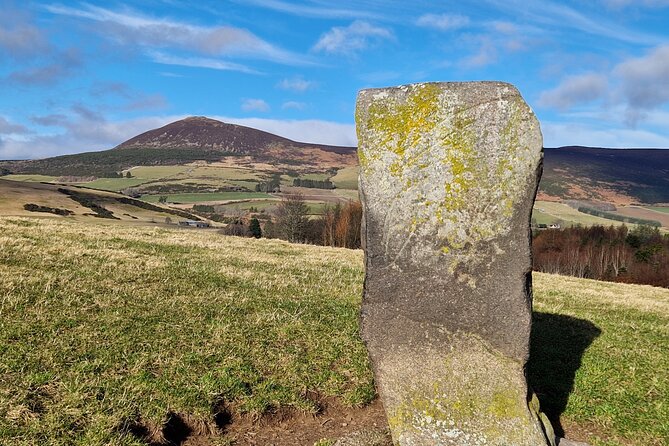
You also get Pictish carved stones as part of the stop. This is one of the most meaningful portions of the tour because you are not just looking at stone, you are learning about symbols, carvings, and how they were likely read.
The Crawstane adds weight to that story. It is a lone standing stone that was once at the center of a settlement described as having trade across the Mediterranean and bringing great wealth. That kind of detail helps you see the Picts as connected, not isolated.
Then the guide ties it to political and cultural change. You will learn about the King of the Scots and how his actions reshaped Scotland’s cultural landscape, which ultimately led toward the downfall of the Picts. It is an intense topic, and hearing it in the open air, with the stones around you, makes it feel more real than a timeline on a page.
Bellabeg picnic by the river and the Doune of Invernochty
For lunch you switch from stone and earthworks to a calmer break. You head to Bellabeg for time near the foot of the Doune of Invernochty motte and bailey castle.
Bellabeg is in the Cairngorm National Park area, and it has that small village feel that works well for a slow lunch. If you bring a picnic, the setting is ideal for eating near the river and taking a relaxed stroll along country lanes.
Lunch isn’t included, but the plan is flexible. You can buy lunch in Insch or Bellabeg, or bring your own food. A cooler is provided, which is a practical detail that matters if you want to bring snacks and keep them fresh.
This pause also helps your body. After hill walking, you get a reset before the last stone circle stop.
Tomnaverie recumbent stone circle: standing where theories matter
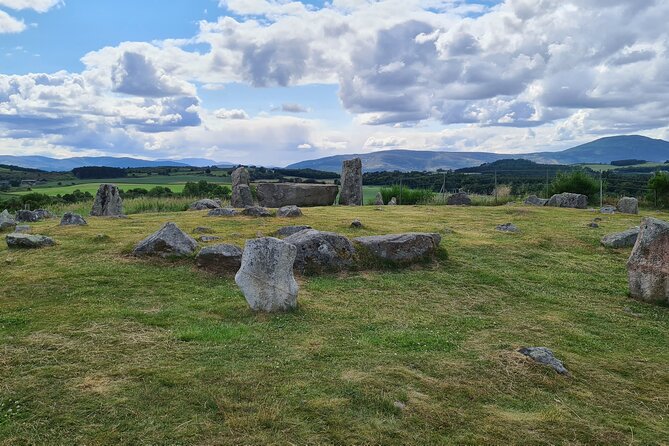
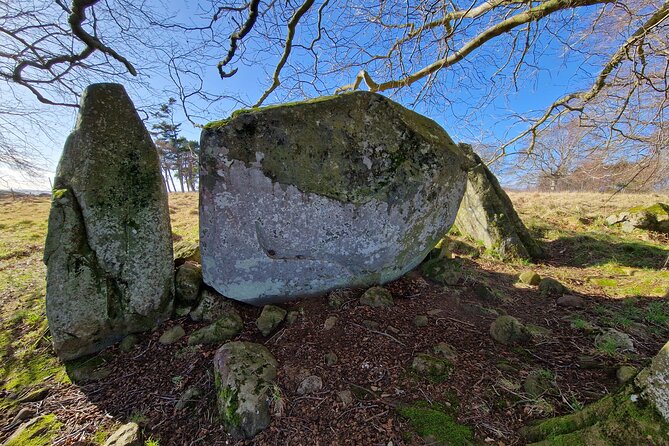
Your final heritage stop is Tomnaverie Stone Circle, a recumbent stone circle type found only in north-eastern Scotland. The structure is distinctive, with a large stone lying on its side, flanked by two upright stones, and other standing stones completing the circle.
The best part is that the guide does not treat it like a finished answer. Relatively little is known about why these monuments were built, and you will hear several theories. For me, that is the right way to do it. You can enjoy the visual pattern and still respect that the full meaning may be lost.
Tomnaverie also links forward into older time. It sits near a burial cairn dating to about 4,500 years ago. That connection helps you feel how long people reused sacred space and how later communities may have been responding to places already loaded with meaning.
With stunning views at this stop, you end the day on a note that feels both specific and open-ended. You leave with a monument you can describe, and questions you can think about after you’re back in town.
History-led days, told differently
Price, pacing, and what to pack for a 7.5-hour day
At $135.49 per person, this sits in the mid-price range for a Scotland day trip. You are paying for more than transportation. You are getting a guided, small-group experience where multiple sites are free to enter, and the guide spends time connecting the sites into one story.
The included items are simple but useful: WiFi on board and a mobile ticket for easy check-in. Lunch is not included, so budget for either a buy-in meal or a picnic. If you want the best value, I suggest planning a picnic, since you know you will have a cooler and a good spot to use it.
Pacing is about comfort and clarity. You have a short walk at Dunnideer, and you should expect hill walking across the day. The physical fitness level is listed as moderate, and the tour is not recommended for mobility issues. If you have walking poles, bring them, because some sections can be steep. The day may allow poles to be borrowed, but do not rely on that. If you are unsure, contact the operator before booking.
What to pack is all about weather and footing. Bring layers, wear grippy shoes, and carry a small day bag for water and a snack. If the weather is showery, the hill paths can get slick, and you will be happier with shoes that handle that.
Finally, keep in mind this experience requires good weather. If weather turns poor, the operator may offer another date or a full refund.
Jacqueline’s guiding style: why personalization matters here
The biggest reason people keep recommending this tour is the guide. Jacqueline stands out for being flexible and attentive, and she has a track record of tailoring the day to what you care about.
In at least some cases, the experience has included extra moments beyond the core heritage stops, such as a cliff viewpoint for sea birds and puffins, plus a whiskey brewery visit and a castle stop. That is not guaranteed on every day, but it tells you what kind of guide Jacqueline is: not rigid, focused on giving you memorable moments when the route and conditions allow.
You also feel the personalization in how questions are handled. If you have specific interests, like Pictish symbolism or how hillforts worked, you are more likely to get targeted explanation instead of a one-size-fits-all lecture.
That matters because Pictish history can feel abstract fast. When the guide can steer your attention to the right details at the right stops, the whole day lands better.
Who should book this Pictish heritage tour, and who should skip it
Book it if you want history with legs. You like outdoor sites, you enjoy reading meaning into what you see, and you do not mind a bit of walking for better access to places that are not overcrowded.
You will also enjoy it if you like folklore as storytelling. This tour is not only about dates. It is about beliefs and the kind of cultural memory that keeps being repeated.
Skip it if hills are a problem for you. The tour is rated moderate fitness and is not recommended for mobility issues. If you have trouble with steep sections or longer hill walks, it might be better to choose a more level option.
Also skip it if you want a fully seated, low-effort day. There are short walks and you will be outdoors for most of the day.
Should you book this tour?
If you are basing your Aberdeen area trip on authenticity over convenience, this is a strong pick. The price makes sense when you factor in free access to the featured stops, the small group size, and a guide who can connect Pictish life to the physical places where it happened.
I would book it if you are the kind of traveler who likes to stand in front of a stone and ask why it was placed there, then keep that curiosity going for hours. This tour gives you that slow, satisfying rhythm, plus the bonus of personalization from Jacqueline.
If you are tight on walking or you dislike open-air sites in uncertain weather, then choose carefully. But for most people who are comfortable on hills and want a story-led day, this one is worth your time.
FAQ
What is the price per person?
The tour costs $135.49 per person.
How long is the tour?
It runs for about 7 hours 30 minutes.
Where do I meet, and what time does it start?
You meet at the William Wallace Statue on Union Terrace, Aberdeen, AB10 1NP. The start time is 9:00 am, and the tour ends back at the meeting point.
Is lunch included?
No. Lunch is not included. You can buy lunch in Insch or Bellabeg, or bring a picnic. A cooler is provided.
Are there admission fees for the stops?
Admission tickets are listed as free for the stops included on the day.
Is this tour difficult to walk?
The tour is listed for travelers with a moderate physical fitness level. There are hill sections, and some parts can be steep. If you have walking poles, bring them, and some adjustments may be possible.
Is it recommended for travelers with mobility issues?
It is not recommended for travelers with mobility issues.
How many people are in the group?
The maximum group size is 7 travelers.
What if the weather is bad, or I need to cancel?
The experience requires good weather. If it is canceled due to poor weather, you will be offered a different date or a full refund. You can cancel for free up to 24 hours in advance for a full refund.
History, Told Differently
The Rest of What We Wrote Up



Granite, Cliffs and the Northeast
Newest write-ups around Aberdeen
- Private Balmoral Glamis Dunnottar Castles Tour from Aberdeen★ 5.0 · 3 reviews
- Aberdeenshire and Royal Deeside Private Half-day Castle Tour★ 5.0 · 4 reviews
- Aberdeen’s Ancient Heritage and Folklore★ 5.0 · 4 reviews
- Private Aberdeen City Walking Tour★ 5.0 · 6 reviews
- Balmoral Craigievar Dunnottar Crathes Castles Tour from Aberdeen★ 5.0 · 7 reviews
Aberdeen, Dunnottar & the Northeast Coast, compared.
 ★ 5.0Aberdeen City Centre Walking Tour (2pm)From $19217 reviews
 ★ 5.0Dunnottar Castle and Royal Deeside Small-Group Tour from AberdeenFrom $78196 reviews
 ★ 5.0St Andrews & Cliffs and Dunnottar Castle in Spanish.From $89178 reviews
 ★ 5.0Loch Ness and the Highlands Small-Group Day Tour from AberdeenFrom $129164 reviews
 ★ 5.0North East Coastal Trail Small Group Day Tour from AberdeenFrom $7880 reviews
 ★ 5.0Balmoral & Royal Deeside TourFrom $14479 reviews
 ★ 5.0Coastal Villages of AberdeenshireFrom $14364 reviews
 ★ 5.0Aberdeen’s Distillery Discovery TourFrom $4737 reviews
Browse the lists this tour appears in