
REVIEW · GHOST TOURS, VAULTS & DARK HISTORY
Glasgow Ghost Hunt: The Soul That Got Away Exploration Game
This ghost hunt uses your phone as a map. It turns Glasgow’s streets into a self-guided mystery with an app that gives directions and mini challenges along the way. I like the way it keeps you moving from landmark to landmark without needing a live guide, and I also like the built-in flexibility so you can pause, step away, and keep going.
One thing to consider: the experience depends on the app working well and on location services being enabled, so tech hiccups can make the game feel frustrating if you get stuck at sign-in or matching the right spot.
In This Review
- Key highlights I’d plan around
- Why this Glasgow ghost hunt feels different from a typical tour
- Price, timing, and how long it really takes
- Starting at Glasgow Central, the clue before the clues
- Lighthouse of Glasgow, views and a not-so-light secret
- House of Frasers, shopping energy with a ghost twist
- Tron Theatre, cultural landmark plus a movement puzzle
- Merchant City square, tobacco lords and looking for answers
- Buchanan Street, a pedestrian walk and quick facts on the move
- George Square and City Chambers, statues, stairs, and a Mandela link
- Finishing at George Square, statues as the last clue
- The app and location-based play: what to do before you press start
- How to get the most out of each checkpoint
- Weather, comfort, and adding your own break time
- Who this Glasgow ghost hunt is best for
- Should you book the Glasgow Ghost Hunt game?
- FAQ
- How long does the Glasgow Ghost Hunt: The Soul That Got Away exploration game take?
- Where do I start and where does the game end?
- Do I need a physical guide?
- Is the tour in English?
- Do I need to buy entry tickets for attractions?
- Can I start at any time after booking?
- Is it an outdoor walking experience?
- Can I cancel and get a full refund?
Key highlights I’d plan around

- Smartphone-led directions help you find each checkpoint without getting lost
- Start-stop flexibility means you can take breaks and finish at your pace
- Open-air, self-guided format keeps the flow flexible and avoids crowding
- City-center landmarks on a tight loop makes it a practical way to sightsee
- Minimal extra costs since you do not need entry tickets for stops
- Decent value at $6 per person for roughly 1.5 hours of walking and puzzles
Why this Glasgow ghost hunt feels different from a typical tour
Glasgow has plenty of ghost stories, but this one is built like a game. You’re not just listening to a guide talk about the past. You’re solving clues tied to where you are, using your phone to keep the story moving. That changes the pace. Instead of checking the time, you’re checking the next clue.
At $6 per person for about 1 hour 30 minutes, the math is pretty friendly. You get a structured route through some major spots (and some less obvious corners) with a theme that nudges you to look twice at architecture, statues, and street views. If you like independent exploring, this style is easier to fit into a travel day than a fixed guided tour.
The format is also practical. It’s self-guided and open air, and you avoid crowding because you’re not stuck in a big group listening at one spot. That matters in Glasgow, where you can easily spend a day bouncing from building to building. This game gives you a reason to walk that loop.
The big “yes, but” is tech. The experience is designed around the app, and at least some players have hit app login or progress issues. One even pointed out that the game will not work without locations on. So before you start, set yourself up for success: charge your phone, use location services, and make sure you can sign in cleanly.
Price, timing, and how long it really takes
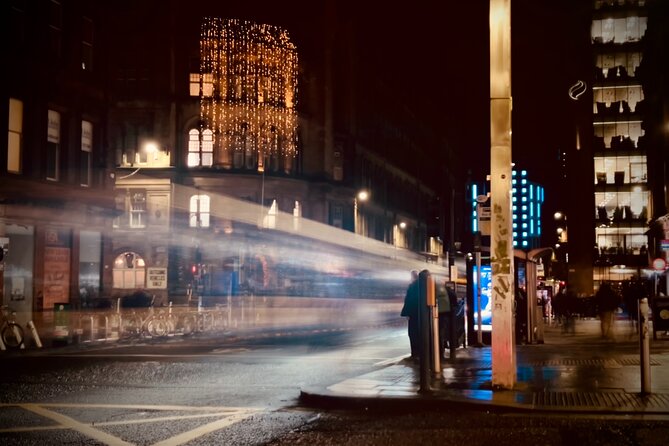
The published duration is about 1.5 hours, and that’s a good target for a smooth run with no long stops. Still, real life can stretch it. People have reported taking around 2 hours when they added a pub break. That’s not a problem, but it helps to know you’re not racing a clock. Treat it like a wandering walk with checkpoints.
You can play any time after booking without rescheduling, and the venue hours are listed as 12:00 AM to 11:59 PM for the overall period shown. In plain terms, you can do this at whatever time fits your day. I’d still recommend daylight or early evening if this is your first time in the city, just because you’ll be reading details and navigating on the move.
One more detail: this seems to get booked ahead on a regular basis, with an average booking window around 13 days. If your dates are busy, don’t leave it to the last minute.
What else runs out of Glasgow
- Guided Celtic Park Stadium Tour
★ 5.0 · 3,136 reviews - City Sightseeing Glasgow Hop-On Hop-Off Bus Tour
★ 4.5 · 1,873 reviews - Oban, Glencoe, Highlands Lochs & Castles Small Group Day Tour from Glasgow
★ 5.0 · 1,432 reviews - Glasgow City Centre Walking Tour with Local Guide
★ 5.0 · 1,326 reviews
Starting at Glasgow Central, the clue before the clues
Your journey kicks off at Glasgow Central on Gordon Street. It’s one of Glasgow’s best “start lines,” because it’s visually obvious and easy to find. You also get a quick lesson in why this area matters. The station is known for its impressive glass roof and Victorian architecture, and the game even points you to the idea that there were old underground spaces, like vaults, catacombs, and disused platforms.
Then comes the first test. You’re asked to look around, find a missing clue, and start thinking like a sleuth. This matters because it sets the tone: you’re not passively moving. You’re actively observing. If you rush here, you’ll spend extra time later.
Practical tip: take 2 minutes at the start to check your app status and GPS. If the sign-in feels slow or the screen won’t load, fix it early. Waiting until later makes everything more stressful.
Lighthouse of Glasgow, views and a not-so-light secret
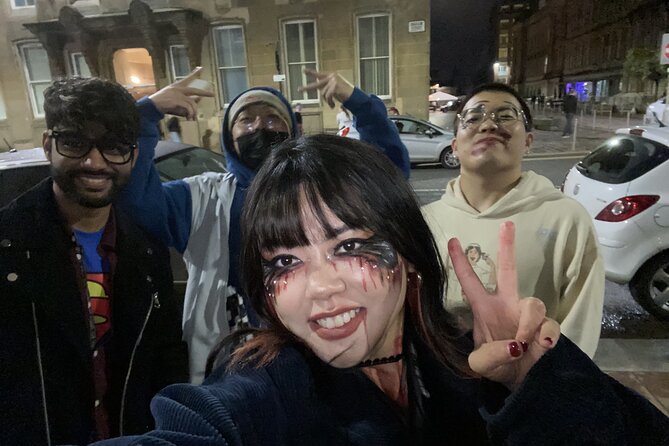
Next you’re guided to Scotland’s Centre for Design and Architecture, the Lighthouse of Glasgow. The game uses the lighthouse concept in a smart way. It frames the building like a beacon, and then it shifts your attention upward.
Even though a lighthouse normally means sea views, here you’re pointed toward uninterrupted city views. The point is to make you look at Glasgow as a whole, not just the buildings at your feet. After that, there’s a “not very light” secret in the mix, and you’re nudged to check your surroundings closely to find the next checkpoint.
This is one of the stops where the game feels most like a storytelling device. You’re standing in a real landmark, then the clue forces you to notice something specific that you might otherwise ignore.
House of Frasers, shopping energy with a ghost twist
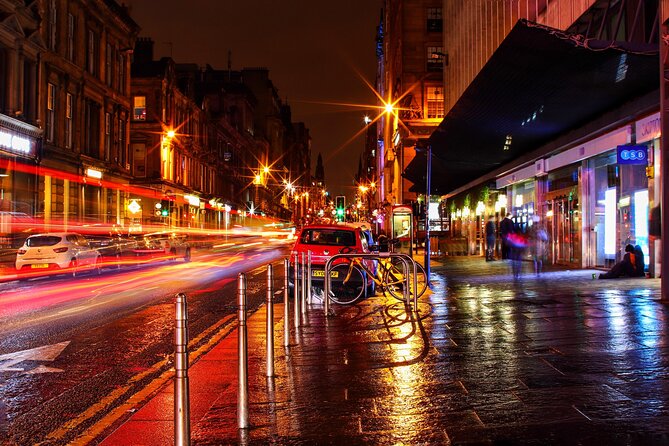
The route continues to House of Frasers, the big UK department store. The game leans into a playful idea: the afterlife might show up in a store where you’d expect fashion and shopping.
The challenge here is question-based, and it’s meant to keep you moving even if you’re not shopping in the normal sense. If you like “do one quick thing, then move on” style games, this stop should work well.
One note from real-world play: at least one person reported that a map reference for a clue about a peacock seemed slightly off, sending them to the back of the building rather than the front. So if your app points you somewhere that seems odd, don’t panic. Re-check the exact location and orientation, then adjust your route. A tiny bit of street-level common sense saves you time.
Tron Theatre, cultural landmark plus a movement puzzle
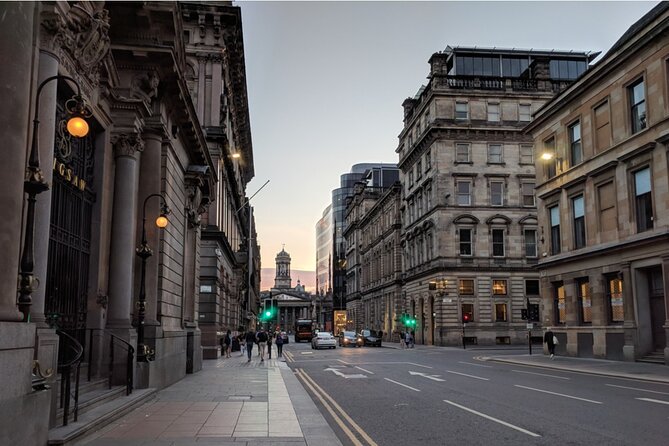
Then you reach the Tron Theatre, a cultural venue that has been active in Glasgow for years. The game treats it as a kind of stage, and it asks you to get into the challenge mindset: warm up your voice, prepare your moves, and push forward to the next checkpoint.
Even if you feel slightly silly doing that on a sidewalk, that’s the point. This is the stop that breaks up the “history only” vibe and adds energy. You’re still seeing a real landmark, but you’re also participating.
If you’re traveling with kids, this is a great checkpoint. It gives you something to do that isn’t just staring at text on a screen.
Darker walks for when the streetlights come on
Merchant City square, tobacco lords and looking for answers
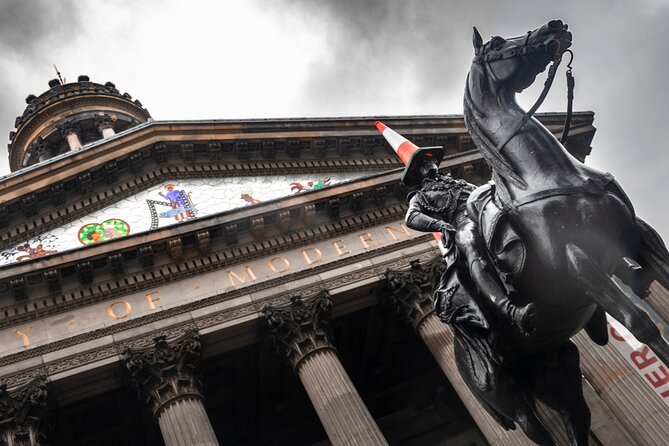
Mid-adventure, you’re dropped into a square area tied to the Merchant City story, with an era in the mid-1750s. The theme here is trade: residents interacting with merchant tobacco lords who profited from shipping and selling items like tobacco, sugar, and tea.
This section is where the walking feels like a mini social studies lesson. The Merchant City area has had a strong comeback in recent years, and the game steers you to notice what you see today, then connect it back to the economic history behind the streets.
The challenge is to search for the unspoken truths of Merchant City by looking for specific answers around you. It’s not just about solving. It’s about reading the street.
A practical tip: give yourself a little extra time here. Open space means you can check your app, but it also means you can lose track if you rush. Slow down enough to take in both the present streetscape and the historical framing.
Buchanan Street, a pedestrian walk and quick facts on the move
From Merchant City, you head to Buchanan Street, Glasgow’s main pedestrian boulevard. The game explains the street’s origins and ties it to the tobacco lord Andrew Buchanan, including the fact that the street was inaugurated in 1777 and carries his name.
What I like about this part is that Buchanan Street is already a place you’d likely walk anyway. The game gives you a reason to move at a steady pace without feeling like you’re doing chores. You’re also nudged toward answering questions as you cross the street and explore.
If you’re hoping for big, theatrical “ghost moments,” this stop may feel more like history and puzzles than supernatural drama. One player even summed it up as more of a location and history tour with a ghost theme rather than a heavy ghost-story experience. If that’s your preference, this middle-to-late stretch is a good fit.
George Square and City Chambers, statues, stairs, and a Mandela link
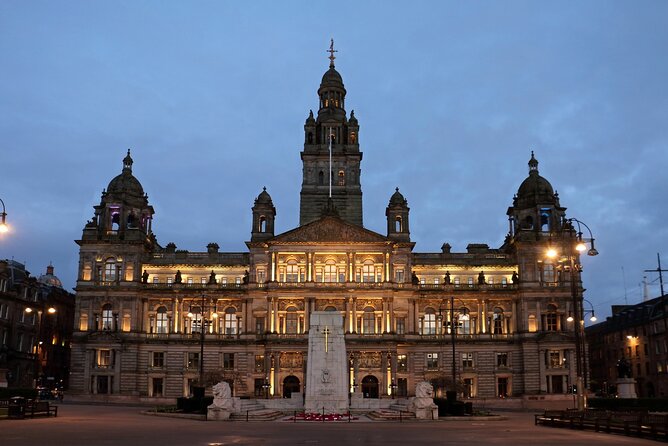
The finale stage starts around George Square and the City Chambers of Glasgow. The game pulls you into one of Glasgow’s most iconic civic spaces.
The City Chambers are framed through a notable detail: a statue locally known as Glasgow’s Statue of Liberty. Then you’re guided toward the largest marble staircase in Western Europe, which is a striking visual feature and a real draw if you like grand interiors.
The story then connects the place to a major world figure. The game notes that Nelson Mandela received his Freedom of the City award here in 1993. Even if you’ve heard the name before, this kind of specific, place-tied fact lands harder than a generic mention.
After that, you keep walking and solving to reach the end. The game is building momentum so the last checkpoint feels like a reward, not just another stop.
Finishing at George Square, statues as the last clue
The last checkpoint is George Square, framed as one of the city’s best-loved civic squares. The game ties it back to King George III, then points you toward the area’s statue lineup, including figures like Robert Burns, James Watt, Sir Robert Peel, and Sir Walter Scott.
This finale works well because George Square is naturally a place where you can pause, look up, and scan details. You’re not trapped inside. You end with views and landmarks that you can remember and refer back to later.
If you want a creepier souvenir, one person mentioned a memorable moment seeing a haunting shadow of a lady on a wall opposite the Scotia. That kind of moment can be hit-or-miss depending on lighting and exactly what you notice, but it’s a good example of how the game uses real city surfaces to create atmosphere.
The app and location-based play: what to do before you press start
This is the section that determines whether you have fun or frustration. Since progress depends on your phone and location data, do a quick setup first.
Here’s what I’d do:
- Charge your phone fully before you begin.
- Turn on location services so the game can match checkpoints to where you stand.
- Confirm you can sign in without delays.
- Keep screen brightness up so you can read clues on the go.
When things go wrong, it usually looks like this: the app signs in slowly, the upload or connection feels tricky, or answers don’t register even if you think you got them right. One player reported an issue where the correct answer was marked wrong because of a street wording detail. Another quit because clues were hard to interpret. These are not deal-breakers, but they are reasons to start with a clear device setup.
Also, don’t assume you can “click through” without being in the right location. One report made it clear that the experience needs location access to work. So if your phone is denying location permissions, fix that right away.
How to get the most out of each checkpoint
This game works best when you treat the clues like a scavenger mindset. You’re walking, but you’re also scanning.
At each stop, I suggest:
- Take 30 seconds to look around before answering.
- Answer, then check you’re actually at the right spot before moving on.
- If the app points you somewhere that seems slightly off, adjust carefully and re-orient.
If you’re the kind of traveler who hates being stuck with a screen, this is still worth trying. The route is short enough that you’re not tethered for hours. The walking keeps you connected to the city, and the app just adds structure.
For groups, it’s a private activity, which is nice. It also means your group stays together rather than mixing with strangers. If you have more than 15 people, the provider notes that you may need multiple bookings.
Weather, comfort, and adding your own break time
Because it’s open air, weather matters. One player did the game during the Hogmanay period in early January, and heavy rain ended the game prematurely. That’s a reminder to bring layers and have an exit plan if the sky turns.
The game is flexible about breaks. People have added a pub stop without ruining the experience. Just remember that opening hours for bars and shops vary by day, especially around holidays. If you plan a longer pause, pick a spot you can reach quickly and get back on route.
Who this Glasgow ghost hunt is best for
This is a strong match if you want:
- A low-cost way to cover major Glasgow sights in about 1.5 to 2 hours
- A mix of walking, puzzles, and city details
- A family-friendly adventure where kids can solve riddles without a spoken script
- A self-guided plan that lets you move at your own pace
It may be less ideal if you:
- Want nonstop ghost storytelling at every stop
- Get easily frustrated with app sign-in or GPS problems
- Prefer a purely narrative ghost show with minimal puzzle work
If you’re okay with “some parts are creepy, some parts are history with mystery,” you’ll probably enjoy it more.
Should you book the Glasgow Ghost Hunt game?
I’d book it if you’re looking for a fun, practical way to see Glasgow without paying for multiple attractions. At $6 per person, the value is hard to ignore, especially since you don’t need entry tickets to make the route work.
But book with one mindset: this is tech plus location-based clues. If your phone hates apps, your signal is weak, or you tend to skip location settings, the experience can turn into a hassle fast. If you can prepare your phone and go in expecting a puzzle-driven walk, this makes a great evening plan.
In short, it’s a clever little Glasgow loop that feels like a scavenger hunt with a ghost theme, anchored by real landmarks like Glasgow Central, the Lighthouse of Glasgow, House of Frasers, the Tron Theatre, and the big end payoff at George Square.
FAQ
How long does the Glasgow Ghost Hunt: The Soul That Got Away exploration game take?
It’s listed as approximately 1 hour 30 minutes.
Where do I start and where does the game end?
You start at Glasgow Central on Gordon St in Glasgow G1 3SL, and you finish at West George Street in Glasgow G1 2AF.
Do I need a physical guide?
No. This is self-guided, and a physical tour guide is not included.
Is the tour in English?
Yes, the experience is offered in English.
Do I need to buy entry tickets for attractions?
No entry tickets are needed to complete the tour.
Can I start at any time after booking?
Yes. You can play anytime after booking without rescheduling, and the experience is flexible so you can start and stop at your pace.
Is it an outdoor walking experience?
Yes. It is self-guided and open air.
Can I cancel and get a full refund?
Yes. Free cancellation is available if you cancel up to 24 hours in advance for a full refund. If you cancel less than 24 hours before the start time, there is no refund.
The Rest of What We Wrote Up




When the Streetlights Come On

What Else Leaves Glasgow
Newest write-ups around Glasgow
- The Scottish Highlands Photography Tour & Workshop★ 5.0 · 3 reviews
- Scottish Highland Day Tour from Glasgow★ 5.0 · 3 reviews
- Whisky Adventure – Private Day Tour from Glasgow★ 5.0 · 3 reviews
- 3 Day Isle of Skye Eilean Donan Castle and Loch Ness Tour★ 5.0 · 3 reviews
- Pints & Past: Glasgow Pub Tour Private Tour★ 5.0 · 3 reviews
Ghost Tours, Vaults & Dark History, compared.
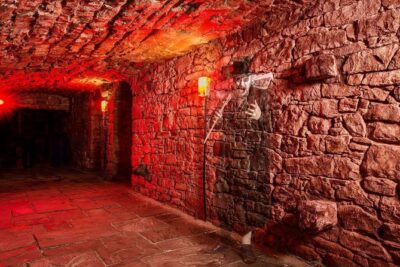 ★ 4.5The World Famous Underground Ghost TourFrom $269,272 reviews
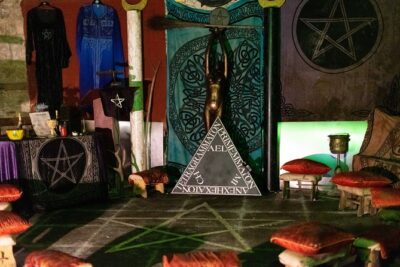 ★ 4.5Underground Vaults Walking Tour in Edinburgh Old TownFrom $338,506 reviews
 ★ 5.0Edinburgh Darkside Walking Tour: Mysteries, Murder and LegendsFrom $293,862 reviews
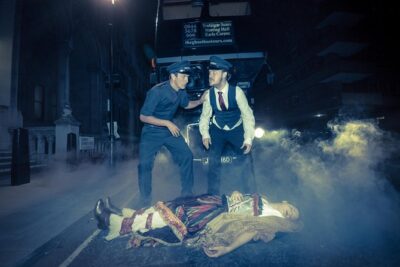 ★ 4.5Ghost Bus Tour of EdinburghFrom $242,761 reviews
 ★ 5.0Haunted Vaults Walking Tour in EdinburghFrom $332,183 reviews
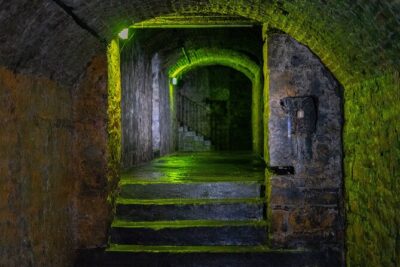 ★ 4.5Haunted Vaults and Graveyard Walking Tour in EdinburghFrom $361,702 reviews
 ★ 4.5Multi-Sensory Haunted Underground Vaults Tour in EdinburghFrom $371,649 reviews
 ★ 4.5Extreme Paranormal Underground Ghost Tour in EdinburghFrom $291,587 reviews
Browse the lists this tour appears in